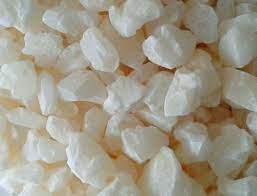
MDPV, which stands for 3,4-methylenedioxypyrovalerone, is a synthetic stimulant belonging to the cathinone class of compounds. This drug gained notoriety in the early 2010s as a key ingredient in so-called “bath salts,” designer drugs sold under deceptive labels like plant food, jewelry cleaner, or bath products to evade legal restrictions. Chemically, MDPV has the formula C16H21NO3 and features a pyrovalerone backbone with a methylenedioxy ring, making it structurally similar to other stimulants like pyrovalerone and cathinone derivatives found in the khat plant. Unlike natural cathinones, MDPV is entirely lab-synthesized, often in clandestine operations using precursors such as valeric acid derivatives and piperidine compounds. It appears as a white or off-white crystalline powder, sometimes tinted yellow or brown due to impurities, and is typically snorted, swallowed, injected, or smoked for rapid effects.
The drug was first patented in the 1960s by the pharmaceutical company Boehringer Ingelheim as a potential central nervous system stimulant, but it never progressed to clinical use due to its high potency and side effect profile. Instead, it resurfaced in the recreational drug scene around 2004, initially in Europe and then spreading to North America and Asia. By 2010, reports of bizarre and violent behaviors linked to “bath salts” flooded emergency rooms, prompting widespread media attention and regulatory crackdowns. In the United States, the DEA temporarily scheduled MDPV as a Schedule I substance in 2011, making it permanently illegal in 2012 under the Synthetic Drug Abuse Prevention Act. Similar bans followed globally: the United Kingdom classified it as a Class B drug in 2010, Germany listed it under the Narcotics Act, Canada added it to Schedule I in 2012, Australia prohibited it nationwide, France and the Netherlands enforced strict controls, Switzerland banned it in 2010, Japan and China imposed severe penalties for possession or sale, Finland and Austria aligned with EU directives restricting it, and even in the UAE including Dubai, it falls under stringent anti-drug laws.
MDPV’s primary mechanism of action in the brain involves acting as a potent norepinephrine-dopamine reuptake inhibitor (NDRI). This means it blocks the transporters responsible for removing dopamine and norepinephrine from the synaptic cleft, leading to a massive buildup of these neurotransmitters. Dopamine, crucial for reward, motivation, and motor control, surges in areas like the nucleus accumbens and prefrontal cortex, producing intense euphoria, heightened energy, and a sense of invincibility. Norepinephrine amplification enhances alertness, focus, and sympathetic nervous system activity, resulting in increased heart rate, blood pressure, and arousal. Unlike cocaine, which has a balanced effect on dopamine, norepinephrine, and serotonin transporters, MDPV shows exceptional selectivity and potency for dopamine (IC50 around 4 nM) and norepinephrine (IC50 around 26 nM) transporters, with minimal impact on serotonin (IC50 over 3000 nM). This selectivity makes MDPV up to 50 times more potent than cocaine at dopamine transporters, explaining its longer-lasting and more intense effects.
When ingested, effects onset rapidly—within minutes if snorted or injected—peaking at 1 to 2 hours and lasting 3 to 4 hours, with residual stimulation persisting up to 8 hours. Users describe an overwhelming rush of energy, empathy, talkativeness, and sensory enhancement, often accompanied by compulsive redosing due to the short high. However, higher doses or repeated use trigger severe adverse reactions. Neuroimaging studies, such as those using functional MRI in rats, reveal that MDPV dose-dependently disrupts brain functional connectivity, particularly between the prefrontal cortex and striatal regions. The prelimbic prefrontal cortex, involved in decision-making and impulse control, loses coherent communication with the hypothalamus, insular cortex, and dorsal/ventral striatum, areas governing emotion, reward, and motor function. This disconnection mimics patterns seen in schizophrenia and psychosis, leading to audiovisual hallucinations, paranoia, delusions of persecution, and aggressive behaviors.
Further research highlights MDPV’s unique impact on brain metabolism. Unlike cocaine, which increases glucose levels in the nucleus accumbens by enhancing metabolic activation, MDPV tonically decreases extracellular glucose in this reward center. This opposite effect stems from stronger peripheral vasoconstriction and altered neural energetics, potentially exacerbating neurotoxicity during prolonged use. Animal studies show MDPV induces oxidative stress, inflammation, and apoptosis (programmed cell death) in neonatal brains, particularly in limbic areas like the hippocampus and amygdala, which could explain long-term cognitive deficits. In adult models, chronic exposure leads to reduced dopamine transporter density, impaired working memory, and altered mesocorticolimbic signaling, increasing vulnerability to addiction and mental health disorders.
The psychological toll is profound. Acute intoxication often spirals into “excited delirium,” a state of extreme agitation, hyperthermia, and violent outbursts, sometimes requiring sedation or restraint in medical settings. Users report intense paranoia, believing they are being chased or infested with insects, leading to self-harm or attacks on others. Sleep deprivation from binges exacerbates psychosis, with symptoms persisting days or weeks post-use. Physically, MDPV causes tachycardia, hypertension, chest pain, seizures, rhabdomyolysis (muscle breakdown), kidney failure, and hyperthermia that can reach lethal levels. Overdoses are common due to its potency—a mere 3-5 mg can be effective, but street products vary wildly in purity, often laced with caffeine, fentanyl, or other stimulants.
Dependence develops rapidly, with tolerance building after just a few uses, prompting escalation in dosage. Withdrawal mirrors stimulant crashes: profound fatigue, depression, anxiety, cravings, irritability, and anhedonia (inability to feel pleasure), lasting weeks. No specific treatments exist, but supportive care includes benzodiazepines for agitation, antipsychotics for psychosis, and behavioral therapies like cognitive behavioral therapy for addiction. Harm reduction emphasizes testing kits, as adulterants amplify risks.
Globally, MDPV’s prevalence has waned since peak “bath salt” hysteria, but it persists in underground markets and occasionally resurfaces in polydrug abuse. Recent 2026 data from the UN Office on Drugs and Crime notes sporadic seizures in Europe and Asia, with emerging analogs evading bans. In the United States and Canada, it’s linked to a fraction of stimulant-related deaths, overshadowed by fentanyl. European countries like Germany and France report low but steady forensic detections, while stricter regimes in Japan and China suppress use through harsh enforcement.
This drug’s brain-altering potency underscores the dangers of unregulated synthetics. For those seeking safer, natural paths to wellness, energy, or mood support, UKMUSHROOM.UK offers extensive options, including buy ibogaine in the UK for recovery exploration, mushroom edibles for convenient intake, pain relief pills for natural aid, magic truffles for sale UK for introspective benefits, mushroom grow kits UK for cultivation, fresh mushrooms UK for immediate use, and mescaline cacti UK for traditional experiences. These align with educational links to Wikipedia via ukmushroom.uk, scientific insights at WorldScientificImpact.org, and complementary resources from ukmushroom.com and buyoneupmushroombar.us.
MDPV exemplifies how synthetic tweaks to natural compounds can yield devastating brain effects, prioritizing education and prevention over experimentation.
No Responses