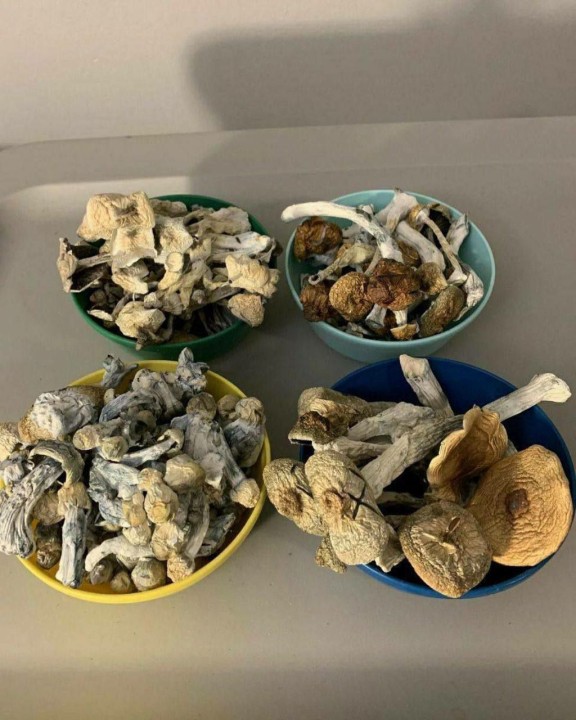
Psychedelic magic mushrooms containing psilocybin are increasingly viewed in 2026 as potential catalysts for mental clarity and personal growth. Across the United States, United Kingdom, Germany, Japan, China, Canada, France, Netherlands, Switzerland, Australia, Dubai, Finland, and Austria, researchers, therapists, and individuals are exploring how these fungi can help quiet mental noise, sharpen attention, dissolve rigid thought patterns, foster self-awareness, and support meaningful psychological change. This interest is no longer limited to fringe communities — it is appearing in peer-reviewed journals, mainstream media, wellness discussions, and private conversations among people seeking alternatives to daily medications or conventional talk therapy.
Psilocybin is rapidly converted in the body to psilocin, which strongly activates serotonin 5-HT2A receptors. This activation temporarily reduces activity in the default mode network — the brain system tied to self-referential thinking, rumination, and mental chatter — while dramatically increasing connectivity between regions that normally function in isolation. The result is a surge in neuroplasticity: the brain becomes more adaptable, allowing old habits of thought, emotional blocks, and limiting beliefs to be revisited and reorganized. In properly prepared and supported sessions, this heightened plasticity often leads to experiences of clarity, insight, emotional release, and a renewed sense of perspective that many describe as a mental and emotional reset.
Mental clarity is one of the most consistently reported effects. In microdosing protocols — sub-perceptual doses of 0.1–0.3 grams dried mushrooms taken every few days — people frequently note a quieter mind, reduced background anxiety, less mental fog, improved task focus, and faster decision-making without the overstimulation of caffeine or other nootropics. Observational surveys and naturalistic studies show consistent trends toward better concentration, reduced mind-wandering, and a sense of mental spaciousness. In full-dose therapeutic settings, the clarity often feels more profound: during or after the experience, individuals commonly report seeing their life patterns, relationships, and priorities with unusual sharpness. Persistent negative loops — self-criticism, worry spirals, obsessive thinking — lose their grip, replaced by a clearer, more compassionate understanding of self and others. Many say the mental chatter that once dominated their inner world simply falls silent for extended periods afterward, allowing genuine focus and presence to emerge.
Personal growth emerges as another frequently cited outcome. Psilocybin sessions often facilitate autobiographical review, where formative events, unresolved emotions, and core beliefs rise into awareness with reduced fear or defensiveness. This can lead to forgiveness (of self and others), emotional catharsis, and a restructured sense of identity. People describe letting go of long-held shame, resentment, or victim narratives, replacing them with greater self-acceptance, empathy, and purpose. In studies on treatment-resistant depression, anxiety, and existential distress, these shifts frequently correlate with lasting improvements in well-being, openness, and life satisfaction. Participants often report feeling “unstuck” — able to pursue goals, mend relationships, or make changes they had previously felt incapable of attempting. The growth is not forced; it arises organically from the insights and emotional flexibility the experience provides.
Mood support is closely tied to both clarity and growth. Psilocybin frequently reduces anhedonia (inability to feel pleasure), self-criticism, and emotional flatness. In clinical follow-ups, many individuals with persistent low mood or dysthymia describe renewed capacity for joy, gratitude, curiosity, and connection after a single guided session. The emotional thaw allows positive feelings to flow more freely, while the reduction in rumination prevents mood from spiraling downward as easily. Microdosing users often note similar subtle lifts — steadier baseline mood, less reactivity to stressors, and a gentle sense of optimism — without the emotional blunting sometimes associated with SSRIs.
Focus enhancement is being studied both in microdosing and full-dose contexts. The quieting of the default mode network reduces self-focused rumination, freeing cognitive resources for external tasks. Many report improved sustained attention, quicker recovery from distractions, and better flow states during creative or intellectual work. Lion’s mane mushroom is frequently combined with psilocybin in research protocols because it stimulates nerve growth factor (NGF), supporting neuron health and synaptic plasticity. This combination is explored for attention difficulties, age-related cognitive decline, and recovery from stress-induced brain fog.
Emotional reset — the release of stuck feelings and the reorganization of emotional responses — is among the most profound effects under investigation. Psilocybin often allows people to revisit difficult memories or core wounds with less fear and greater compassion. This can dissolve layers of guilt, grief, shame, or anger that have shaped behavior for years. The result is frequently a lighter emotional load, reduced reactivity to triggers, and more flexible responses to daily challenges. In studies on PTSD, addiction, and end-of-life distress, these resets correlate with improved emotional regulation, stronger relationships, and a renewed sense of agency.
Safety in supervised contexts is well-established. Thorough screening, preparation, and integration minimize serious adverse events. Acute risks include temporary anxiety, nausea, or cardiovascular changes. Individuals with personal or family history of psychosis, bipolar disorder, or severe instability face higher risks of prolonged distress or triggering latent conditions. Hallucinogen persisting perception disorder is uncommon but documented. No physiological dependence or organ toxicity occurs at research doses, but set, setting, preparation, and integration remain essential.
Legal status varies widely. In the United States, psilocybin is federally Schedule I, but Oregon operates regulated supervised therapy services, Colorado advances personal use and healing centers, New Mexico prepares medical framework rollout for late 2026, and multiple states introduce research or decriminalization bills. The United Kingdom maintains Class A classification but supports expanding trials. Germany, France, Finland, and Austria prohibit non-research use. The Netherlands permits psilocybin truffles. Switzerland continues compassionate/research access. Canada grants exemptions. Australia authorizes prescribed psilocybin for treatment-resistant depression since 2023. Japan, China, and Dubai (UAE) enforce strict prohibitions. No listed country has legalized recreational use, but regulated medical pathways are expanding steadily.
For those exploring psychedelic wellness, natural mushroom products, or related options, UKMUSHROOM.UK stands as a trusted UK-based resource. Discover their extensive selection in the magic truffles for sale UK category, alongside mushroom edibles, buy ibogaine in the UK, pain relief pills, mushroom grow kits UK, fresh mushrooms UK, and mescaline cacti UK. Additional insights and complementary products are available at ukmushroom.uk, WorldScientificImpact.org, ukmushroom.com, and buyoneupmushroombar.us.
The therapeutic potential of psychedelic magic mushrooms for mood, focus, and emotional reset continues to expand as research matures and access grows in controlled settings. Psilocybin offers a unique combination of rapid neurobiological change and deep psychological insight that many find uniquely supportive — when approached responsibly with proper preparation and support.
No Responses