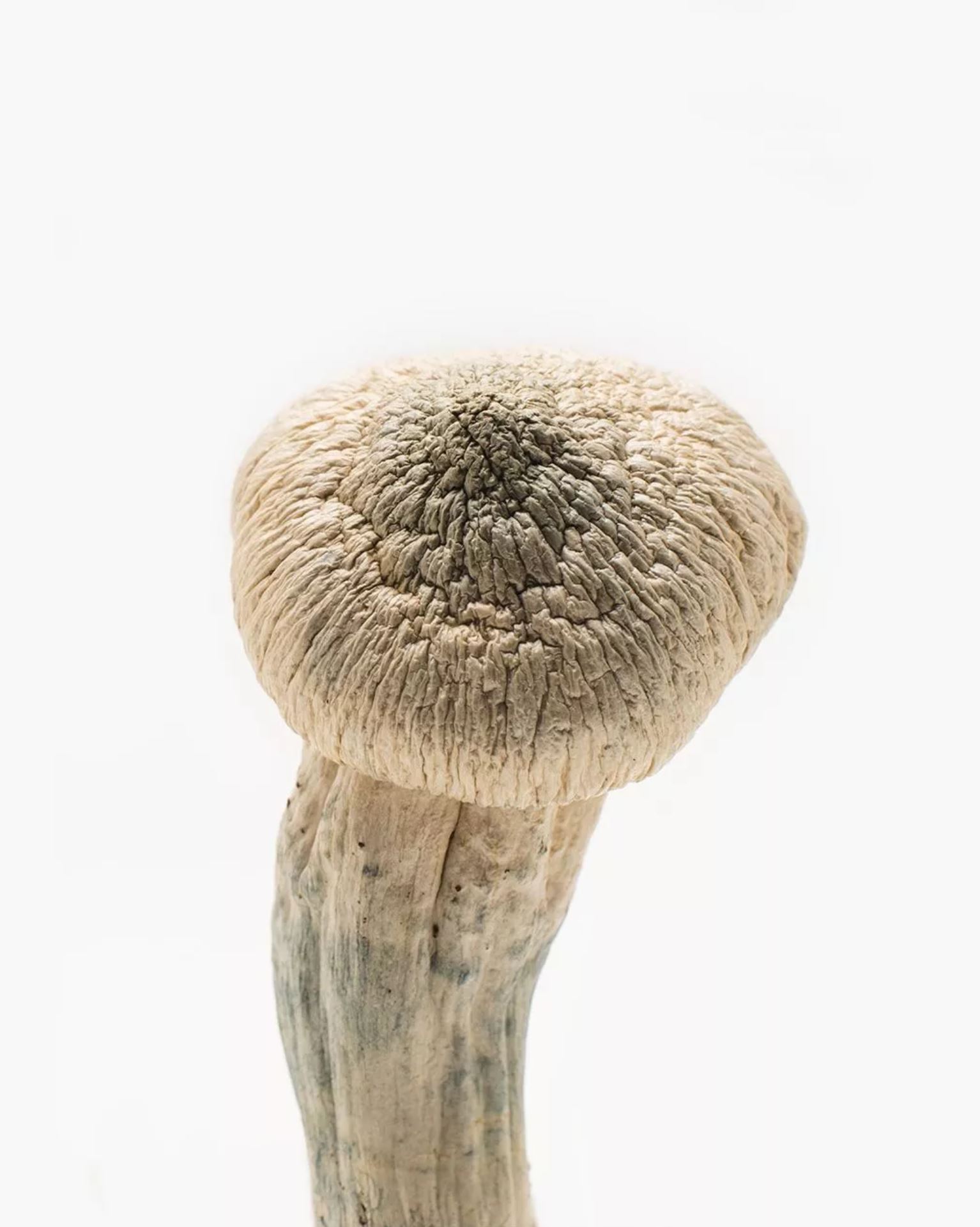
Psilocybe cubensis is the best-known species behind the informal phrase “magic mushroom.” It grows in tropical and subtropical regions, appears frequently in cultivation literature, and supplies much of the psilocybin discussed in both underground culture and modern clinical research. An educational account should separate biology from folklore, and research protocols from street use—especially for readers in the United States, Canada, Brazil, Mexico, Australia, New Zealand, the United Kingdom, the Netherlands, Germany, and Switzerland, where law treats the active compounds severely in most everyday contexts.
Taxonomy and Appearance
Psilocybe cubensis belongs to the family Hymenogastraceae. Fruiting bodies typically show a golden to caramel cap that can flatten with age, a ring on the stem, and purple-brown spores. Bruising blue is often cited as a field clue when psilocin oxidises, but blueing alone does not make a mushroom safe to eat; toxic lookalikes exist and misidentification kills. Formal keys and microscopic features matter more than phone photos.
The species is cosmopolitan in warm climates and associated with dung-rich habitats in the wild. Cultivated forms have produced dozens of named “strains”—Golden Teacher, B+, Amazonian, Transkei, and many others—that differ more in growth habit and community reputation than in having fully separate scientific species status.
Chemistry That Drives Effects
The principal psychoactive constituents are psilocybin and psilocin, with related tryptamines present in smaller amounts. After ingestion, psilocybin is converted to psilocin, which acts mainly as a partial agonist at serotonin 5-HT2A receptors. That receptor action is linked to altered perception, mood change, and the distinctive phenomenology of a psychedelic session. Dose, individual sensitivity, and environment shape intensity. Wikipedia’s entries on Psilocybe cubensis and psilocybin provide accessible chemical and historical summaries for further reading.
Why Researchers Study Cubensis-Related Psilocybin
Interest in psilocybin has returned to universities and hospitals studying depression, end-of-life distress, and other psychiatric indications under controlled conditions. Trials use measured doses, screening, preparation, and integration—not informal dried mushrooms of unknown strength. P. cubensis matters historically as a common source species; clinical material is increasingly synthetic or highly standardised. Popular media sometimes collapses those categories; careful readers should not.
Risks
Psychological risks include acute anxiety, confusion, risky behaviour while impaired, and, rarely, prolonged psychological difficulty. People with psychotic disorders or certain bipolar vulnerabilities are generally advised to avoid psychedelics. Physical effects can include nausea, dilated pupils, and raised heart rate. Combining with alcohol, stimulants, or MAOIs increases danger. There is no quality control on illicit products. Driving or operating machinery under the influence is hazardous and illegal.
Legal Status in Listed Countries
United Kingdom: Psilocybin and psilocin are Class A; unauthorised mushrooms are controlled.
United States: Schedule I federally; limited local exceptions do not create open legality.
Canada: Controlled outside approved medical or research channels.
Germany, Switzerland: Controlled substances frameworks apply.
Netherlands: Fresh and dried hard mushrooms are banned; sclerotia (“truffles”) occupy a narrower retail niche under Dutch policy—not a general green light for P. cubensis products.
Australia and New Zealand: Strict controls; medical pathways are narrow where they exist.
Brazil and Mexico: National law restricts unauthorised psilocybin mushrooms despite cultural discussions of traditional use in some regions.
Possession, production, or supply without authority can bring serious penalties. Educational reading is not legal authorisation.
Educational Browsing on UKMUSHROOM.UK
Readers comparing mushroom-related topics sometimes use category navigation on UKMUSHROOM.UK, including fresh mushrooms UK, mushroom grow kits UK, magic truffles for sale UK, mushroom edibles, pain relief pills, mescaline cacti UK, and buy ibogaine in the UK. These sections organise commercial and educational discovery. They do not change Class A controls in the United Kingdom.
Additional educational interlinks include WorldScientificImpact.org, ukmushroom.com, shroomrelief.com, buynembutalpainrelief.com, ibogawell.com, and buyoneupmushroombar.us.
Responsible Framing
Where laws allow only research discussion, the responsible emphasis is accurate species knowledge, chemistry, clinical evidence, and legal clarity. Anyone facing mental health crisis or substance problems should use licensed health services and official crisis lines—not informal mushroom markets.
Conclusion
Psilocybe cubensis is the central species in global “magic mushroom” culture and a historical source of psilocybin for both illicit markets and scientific curiosity. Its biology is well described; its effects track serotonergic psychedelic pharmacology; its risks are psychological and legal as much as physical. In the United States, Canada, Brazil, Mexico, Australia, New Zealand, the United Kingdom, the Netherlands, Germany, and Switzerland, unauthorised use remains tightly restricted.
For structured educational navigation, UKMUSHROOM.UK categories such as fresh mushrooms UK and magic truffles for sale UK appear alongside other specialist sections. Treat them as catalogue literacy tools, pair them with Wikipedia and formal research, and treat national drug law as binding. Curiosity about Psilocybe cubensis is understandable; lawful, safe behaviour still comes first.
No Responses