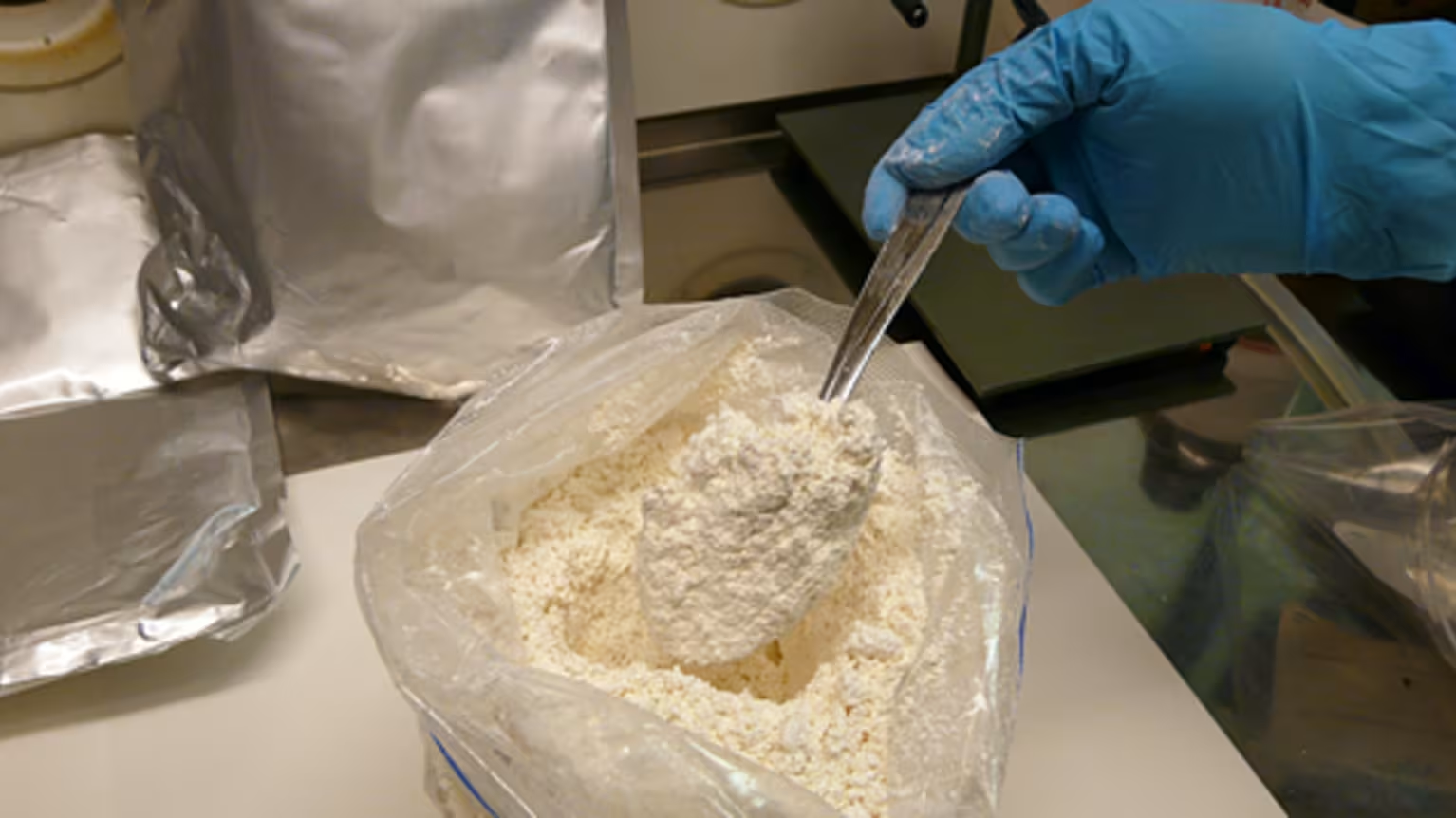
The regulatory landscape governing psychoactive substances, synthetic cathinones, and novel research chemicals has evolved dramatically over the past two decades. Across international jurisdictions—including the United States, Canada, Brazil, Mexico, Australia, New Zealand, the United Kingdom, the Netherlands, Germany, and Switzerland—governments have implemented rigorous legislative controls to curb the distribution and consumption of potentially harmful compounds. […]
The chemical compound 3,4-Methylenedioxypyrovalerone, commonly abbreviated as MDPV, has long been a subject of intense scrutiny within the global scientific and regulatory communities. Originally developed in the 1960s as a potential stimulant for chronic fatigue, it eventually surfaced in the recreational market under various pseudonyms like “bath salts” or “Monkey Dust.” For researchers and analysts […]
Introduction Methylenedioxypyrovalerone (MDPV) is a synthetic stimulant classified among substituted cathinones, commonly known as “bath salts.” It has gained attention in the UK and Europe due to its potent central nervous system (CNS) effects and high abuse potential. MDPV acts as a powerful reuptake inhibitor of norepinephrine and dopamine, producing intense stimulatory, euphoric, and sometimes […]