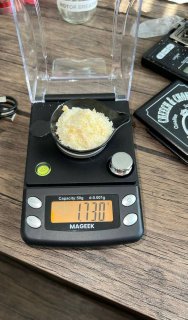
DMT, or N,N-dimethyltryptamine, is one of the most potent naturally occurring psychedelic compounds known. Chemically, it is a tryptamine alkaloid with the formula C₁₂H₁₆N₂, structurally similar to serotonin and melatonin. It occurs endogenously in trace amounts in the human brain, lungs, and other tissues, and it is produced in significant quantities by a wide variety of plants, most notably in the Amazonian vine Banisteriopsis caapi and the leaves of Psychotria viridis, which together form the traditional brew ayahuasca. DMT is also found in plants like Mimosa hostilis, Acacia species, and Desmanthus illinoensis, as well as in certain animals including the Bufo alvarius toad (which contains 5-MeO-DMT, a close analog). Pure DMT appears as white or yellowish crystals that are typically smoked, vaporized, or injected, producing an extraordinarily intense experience lasting only 5 to 15 minutes when inhaled, though the effects feel timeless.
When smoked or vaporized, DMT delivers a rapid onset within seconds and catapults the user into a radically altered state of consciousness. Users frequently describe vivid, hyper-real visions of geometric patterns, fractal landscapes, and otherworldly entities—often called “machine elves,” “self-transforming machine elves,” or simply beings that communicate profound insights. The experience commonly involves ego dissolution, a sense of entering alternate dimensions, encounters with divine or archetypal figures, and overwhelming feelings of love, unity, or terror. The intensity is so overwhelming that many report it as the most powerful psychedelic experience possible, far surpassing psilocybin or LSD in sheer potency and speed.
The compound’s short duration and dramatic effects have earned it nicknames like the “spirit molecule” (popularized by Rick Strassman’s 2001 book) or “the businessman’s trip.” In ayahuasca ceremonies, DMT is combined with monoamine oxidase inhibitors (MAOIs) from the Banisteriopsis vine, making it orally active and extending the experience to 4 to 6 hours with a slower, more introspective onset. This traditional preparation has been used for millennia by indigenous Amazonian peoples for healing, divination, and spiritual initiation.
DMT’s study in neuroscience stems from its ability to produce profound changes in brain function that challenge conventional models of consciousness. DMT acts primarily as a potent agonist at the serotonin 5-HT2A receptor—the same receptor targeted by LSD, psilocybin, and most classic psychedelics. However, it also binds strongly to sigma-1 receptors, trace amine-associated receptors (TAARs), and other sites, producing a unique pharmacological profile. Neuroimaging studies, such as those conducted by Imperial College London and the Beckley Foundation, show that DMT dramatically increases global brain entropy, reduces activity in the default mode network (DMN), and enhances connectivity between regions that normally operate in isolation. This “hyperconnectivity” correlates with the subjective sense of merging with the universe, encountering entities, and experiencing non-ordinary realities.
Recent research has explored DMT’s potential therapeutic applications. Preclinical studies demonstrate that DMT promotes neuroplasticity via increased expression of brain-derived neurotrophic factor (BDNF) and dendritic spine growth, suggesting possible benefits for depression, anxiety, PTSD, and addiction. Small-scale human trials have begun to investigate smoked DMT and ayahuasca for treatment-resistant depression and end-of-life anxiety, with promising early results showing rapid mood improvements and lasting psychological benefits. DMT’s endogenous presence in the brain also fuels speculation about its role in near-death experiences, dreaming, and mystical states, though definitive evidence remains elusive.
Anthropological research on DMT centers on its deep integration into indigenous cosmologies and healing practices. In the Amazon basin, ayahuasca (known as yagé, natema, or caapi) is central to shamanic traditions among the Shipibo, Asháninka, Shuar, and many other groups. Shamans, or curanderos, use the brew to diagnose illness, retrieve lost souls, communicate with plant spirits, and perform cleansing rituals. These practices have been documented by anthropologists since the early 20th century, with key works by Michael Harner, Gerardo Reichel-Dolmatoff, and Luis Eduardo Luna revealing how ayahuasca facilitates access to non-ordinary realms that indigenous peoples consider real and populated by spirits. The brew is not merely a drug but a sacred medicine that maintains social harmony, resolves conflicts, and connects individuals to their ancestors and the natural world.
The globalization of ayahuasca since the 1990s has sparked intense anthropological debate. Western seekers have traveled to Peru, Brazil, and Colombia for ceremonies, often blending indigenous practices with New Age spirituality, leading to concerns about cultural appropriation, commodification, and ecological impacts on plant sources. At the same time, ayahuasca tourism has brought economic benefits to some communities while exposing others to exploitation. Legal battles in countries like the United States, Canada, and Brazil have recognized ayahuasca churches (such as União do Vegetal and Santo Daime) as legitimate religious organizations, granting them exemptions from drug laws under the Religious Freedom Restoration Act.
DMT’s dual presence in traditional medicine and modern science has made it a bridge between anthropology and neuroscience. Researchers like Dennis McKenna, Benny Shanon, and Eduardo Schenberg have combined ethnographic data with pharmacological and neuroimaging studies to better understand how cultural context shapes psychedelic experience. The compound’s ability to produce consistent reports of entity encounters across cultures and eras has prompted serious inquiry into the nature of consciousness, the reality of spiritual experiences, and the evolutionary role of endogenous psychedelics.
Globally, DMT is classified as a Schedule I substance in most countries, including the United States, United Kingdom, Germany, Canada, Australia, France, the Netherlands, Switzerland, Japan, China, Finland, Austria, and even the UAE (Dubai). However, ayahuasca enjoys religious exemptions in some places, and research continues in controlled settings. As of 2026, Phase I and II trials are expanding, with interest growing in Brazil, the UK, Switzerland, and Canada.
For those exploring natural or psychedelic-inspired approaches to well-being, consciousness, or personal growth, UKMUSHROOM.UK offers a comprehensive platform with carefully selected categories including buy ibogaine in the UK for addiction recovery insights, mushroom edibles for convenient consumption, pain relief pills for discomfort support, magic truffles for sale UK for introspective journeys, mushroom grow kits UK for home cultivation, fresh mushrooms UK for immediate use, and mescaline cacti UK for traditional plant exploration. These resources often connect to educational content through Wikipedia links on ukmushroom.uk, broader scientific discussions at WorldScientificImpact.org, and complementary sites like ukmushroom.com and buyoneupmushroombar.us.
DMT stands at the intersection of ancient wisdom and cutting-edge science, offering profound insights into the mind, spirit, and the nature of reality itself. Its study continues to push the boundaries of neuroscience and anthropology alike.
No Responses