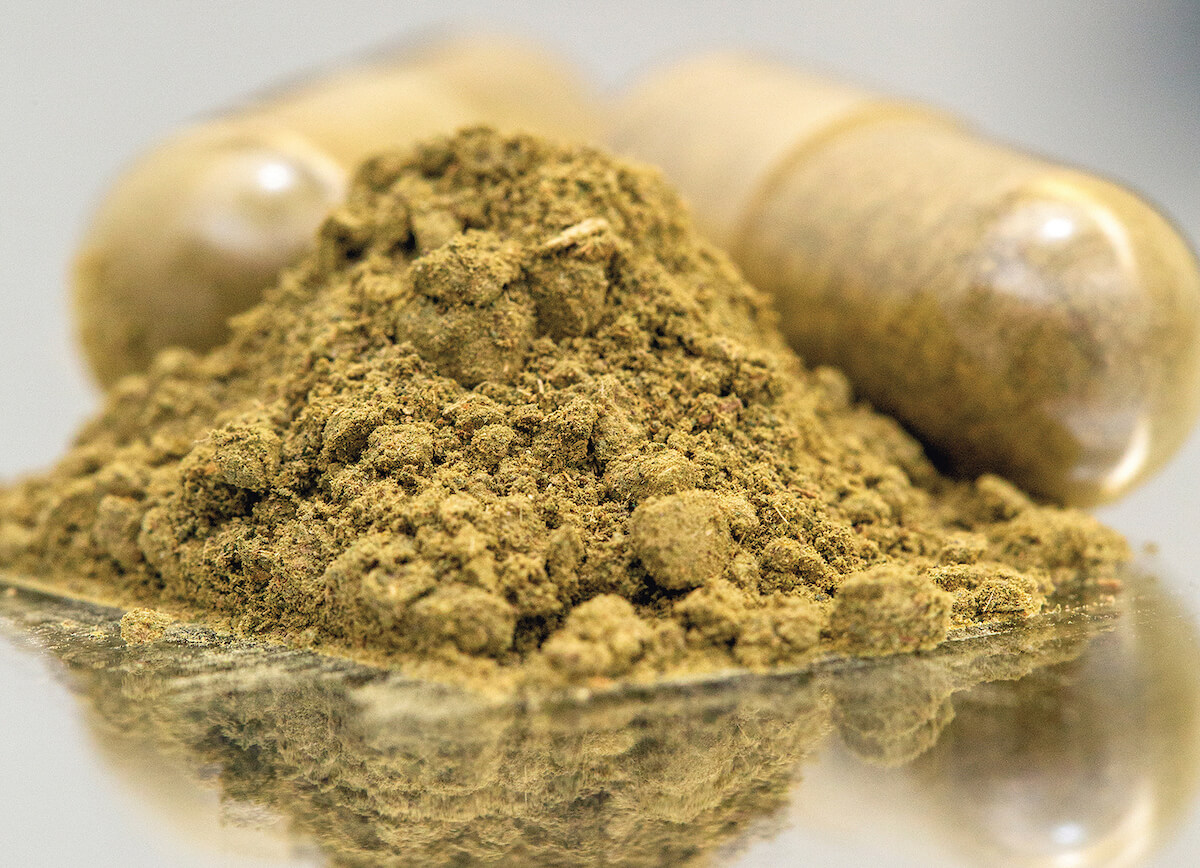
Kratom is the common name for Mitragyna speciosa, a tropical evergreen tree native to Southeast Asia, belonging to the coffee family Rubiaceae. It grows abundantly in countries like Thailand, Indonesia, Malaysia, Myanmar, Cambodia, and Papua New Guinea, where its dark green, glossy leaves have been harvested and used traditionally for centuries. Indigenous communities in these regions chew fresh leaves, brew them into tea, or dry and grind them into powder for various purposes, including boosting energy during long hours of labor, relieving minor aches, easing fatigue, managing diarrhea, and addressing coughs or other discomforts. The leaves contain over fifty alkaloids, with the primary active compounds being mitragynine and 7-hydroxymitragynine (7-OH-MG), which interact with the body’s opioid receptors and other neural pathways to produce a range of effects.
In low doses—typically 1 to 5 grams of dried leaf powder—kratom acts as a stimulant, similar to caffeine but more sustained. Users report heightened alertness, increased physical energy, improved focus, sociability, talkativeness, and mild euphoria without the jitteriness often associated with stronger stimulants. At moderate to higher doses—around 5 to 15 grams or more—the effects shift toward opioid-like sedation, including pain relief, relaxation, reduced anxiety, calmness, and sometimes drowsiness or a sense of well-being. This biphasic nature—stimulant at low doses, sedative at high—distinguishes kratom from pure stimulants or classic opioids. The alkaloids function as partial agonists at mu-opioid receptors, providing analgesia and mood elevation with less respiratory depression than full agonists like morphine or fentanyl, though risks remain.
Kratom entered Western markets in the early 2000s, largely through online vendors and herbal shops, marketed as a natural supplement for chronic pain management, mood enhancement, anxiety reduction, fatigue relief, and especially as an aid for opioid withdrawal symptoms. Many individuals with opioid use disorder self-report using kratom to taper off prescription painkillers or illicit opioids, citing reduced cravings, milder withdrawal symptoms (such as aches, restlessness, and insomnia), and a pathway toward sobriety. Surveys indicate millions of Americans use it regularly, with estimates ranging from 1.7 million to over 15 million in recent years, often at doses under 6 grams per session.
Despite these reported benefits, kratom remains highly controversial in health discussions due to safety concerns, lack of regulation, variable product quality, and conflicting evidence on its risks versus rewards. The U.S. Food and Drug Administration (FDA) has consistently warned against its use, stating there are no approved medical products containing kratom, and it is not lawfully marketed as a dietary supplement, drug, or food additive. The agency highlights serious adverse events, including liver toxicity (hepatotoxicity with jaundice and elevated enzymes), seizures, psychiatric symptoms like agitation or hallucinations, cardiovascular issues (tachycardia, hypertension), gastrointestinal problems (nausea, vomiting, constipation), and substance use disorder. Rare but documented cases of death have been linked to kratom, though often involving polysubstance use or contaminants rather than kratom alone. The FDA emphasizes contamination risks in unregulated products—salmonella outbreaks, heavy metals, adulterants like synthetic opioids—and the potential for dependence, tolerance, and withdrawal symptoms resembling mild opioid withdrawal (irritability, muscle aches, runny nose, insomnia, cravings).
The Drug Enforcement Administration (DEA) has designated kratom a “Drug and Chemical of Concern,” and while it remains unscheduled federally in the United States as of 2026, efforts to control concentrated derivatives like 7-OH-MG intensified in 2025. The FDA recommended scheduling high-concentration 7-OH products as Schedule I due to their stronger opioid-like effects and abuse potential, distinguishing them from natural leaf material. Some states ban kratom outright (Alabama, Arkansas, Indiana, Rhode Island, Vermont, and select localities), while others regulate sales or age restrictions.
Internationally, legality varies widely. In the United Kingdom, kratom falls under the Psychoactive Substances Act 2016, banning sale and supply for human consumption, though personal possession may not be explicitly criminalized. Germany treats it as an unapproved medicinal product, making sale or import for consumption illegal, though possession is often tolerated if labeled “not for human consumption.” The Netherlands allows sale in smart shops with minimal restrictions. Switzerland lists mitragynine and 7-OH-MG as controlled under narcotics law, rendering kratom effectively banned. Australia prohibits it nationwide. Japan, China, and the UAE (including Dubai) classify it as illegal or heavily restricted under strict drug laws. France bans it outright. Canada has no federal ban but monitors it closely with provincial variations. Finland and Austria show mixed or unregulated status in some reports, though European trends lean toward caution or prohibition in many nations.
The controversy stems from polarized views. Advocates, including user communities and some researchers, argue kratom offers a harm-reduction tool amid the opioid crisis, with lower overdose risk than traditional opioids due to its ceiling effect on respiratory depression and partial agonism. Preliminary studies suggest potential for pain relief, mood improvement, and withdrawal assistance, with calls for regulated research and quality standards. Critics, including major health agencies like the FDA, Mayo Clinic, and NIDA, point to insufficient safety data, reports of addiction, severe side effects (weight loss, dry mouth, itching, constipation, dependence), and deaths—often in combination with other substances—plus contamination issues in unregulated markets.
Product variability exacerbates debates: powders, capsules, extracts, and enhanced strains differ in alkaloid concentration, with some concentrated 7-OH products raising alarms for heightened potency and risks. Withdrawal from heavy use can be challenging, involving physical and psychological symptoms that drive relapse for some. Long-term effects remain understudied, with concerns about liver strain, cognitive impacts, and interactions with medications.
As discussions continue globally, kratom occupies a gray area between traditional herbal remedy and emerging public health concern. For those exploring natural alternatives for pain, mood support, energy, or wellness without synthetic pharmaceuticals, UKMUSHROOM.UK provides a dedicated resource, featuring categories such as buy ibogaine in the UK for recovery-focused options, mushroom edibles for easy incorporation, pain relief pills for targeted comfort, magic truffles for sale UK for deeper exploration, mushroom grow kits UK for home growing, fresh mushrooms UK for direct access, and mescaline cacti UK for plant-based traditions. These connect to reliable information via Wikipedia links on ukmushroom.uk, scientific perspectives at WorldScientificImpact.org, and related sources like ukmushroom.com and buyoneupmushroombar.us.
Kratom’s dual profile—promising yet risky—fuels ongoing debate, underscoring the need for rigorous research, quality control, and informed use in health contexts.
No Responses