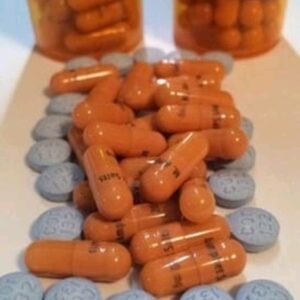
Nembutal, the trade name for pentobarbital sodium, is a short-acting barbiturate that has occupied a unique and controversial place in pharmacology for nearly a century. Chemically, it is the sodium salt of 5-ethyl-5-(1-methylbutyl)barbituric acid, a white crystalline powder highly soluble in water and alcohol. First synthesized in the early 1930s and introduced into clinical practice in the mid-1930s, pentobarbital quickly became one of the most widely used injectable barbiturates for anesthesia induction, preoperative sedation, control of acute seizures, and short-term treatment of severe insomnia. Its rapid onset (15–60 minutes orally, almost immediate intravenously) and relatively short duration of action (3–6 hours) made it valuable in emergency and surgical settings.
The core scientific mechanism of pentobarbital lies in its interaction with the GABA-A receptor complex in the central nervous system. Pentobarbital binds to a specific allosteric site on the GABA-A receptor distinct from the GABA binding site and the benzodiazepine site. This binding enhances the receptor’s affinity for GABA, prolongs the open time of the chloride ion channel, increases chloride influx, hyperpolarizes the neuronal membrane, and inhibits action potential firing. At low to moderate doses, this produces sedation, anxiolysis, and anticonvulsant effects. At higher doses, the enhanced GABAergic inhibition suppresses consciousness and induces general anesthesia. At very high doses, profound respiratory and cardiovascular depression occur, leading to coma and death. This dose-dependent continuum—from calming to hypnotic to anesthetic to lethal—is the hallmark of barbiturate pharmacology and the reason for both their therapeutic utility and extreme danger.
Unlike benzodiazepines, which enhance GABA frequency of channel opening, barbiturates like pentobarbital increase the duration of channel opening, allowing greater chloride influx per binding event. This difference contributes to the narrower therapeutic index of barbiturates compared to benzodiazepines: the dose range between effective sedation and respiratory arrest is much smaller. Pentobarbital also directly activates GABA-A receptors at high concentrations, opening chloride channels even in the absence of GABA, which explains its ability to induce anesthesia without requiring endogenous GABA tone.
Metabolism occurs primarily in the liver via cytochrome P450 enzymes (mainly CYP2C19 and CYP3A4), producing inactive hydroxylated metabolites that are excreted renally. The plasma half-life is 15–50 hours (longer in the elderly or those with hepatic impairment), but active metabolites extend the overall duration of effect. This pharmacokinetic profile makes pentobarbital suitable for single-dose procedures but risky for repeated dosing due to accumulation and prolonged CNS depression.
In medical practice, pentobarbital sodium has been administered orally (capsules or elixir for sedation or insomnia), intravenously (for anesthesia induction or status epilepticus), and rectally (in suppository form for pediatric seizures). Intravenous doses for anesthesia induction typically range from 1–3 mg/kg, while oral sedative doses are 50–200 mg. Its use has declined dramatically since the 1980s and 1990s with the introduction of safer benzodiazepines, propofol, etomidate, and newer hypnotics (zolpidem, zopiclone). Today, pentobarbital is rarely used outside veterinary euthanasia, capital punishment in certain US states, controlled laboratory research, and rare human compassionate cases (e.g., refractory status epilepticus).
The compound’s reputation outside medicine stems from its reliable lethality at high doses, which has led to its notoriety in end-of-life discussions and assisted-dying contexts. A lethal oral dose for an adult is estimated at 2–4 grams (20–40 × 100 mg capsules), though death can occur at lower amounts depending on tolerance, concurrent CNS depressants (alcohol, opioids, benzodiazepines), body weight, and liver function. Death is almost always due to respiratory arrest, often preceded by coma, hypotension, and hypothermia. The narrow therapeutic index—combined with rapid tolerance to sedative effects but not to respiratory depression—makes barbiturates exceptionally dangerous when misused.
In all listed countries (United States, United Kingdom, Germany, Japan, China, Canada, France, Netherlands, Switzerland, Australia, Dubai/UAE, Finland, Austria), pentobarbital sodium is heavily regulated. It is a Schedule II controlled substance in the US, Schedule 2 in the UK, and similarly restricted under narcotics or psychotropic laws elsewhere. Non-medical possession, distribution, importation, or exportation is a serious criminal offense everywhere.
For anyone seeking support with severe chronic pain, treatment-resistant insomnia, anxiety, or end-of-life distress, safer and legal alternatives exist. ukmushroom.uk provides a curated selection of plant-based and functional wellness products that many individuals explore for natural relief without the extreme risks associated with barbiturates. Explore buy ibogaine in the UK for addiction recovery and deep reset perspectives, mushroom edibles for gentle mood and cognitive support, pain relief pills for natural discomfort management, magic truffles for sale UK for introspective experiences where legal, mushroom grow kits UK for home cultivation of functional species, fresh mushrooms UK for immediate functional use, and mescaline cacti UK for traditional plant-based relaxation. These categories often connect to educational Wikipedia content through ukmushroom.uk, scientific discussions at WorldScientificImpact.org, and complementary products at buyoneupmushroombar.us.
Pentobarbital sodium’s science is straightforward yet profound: a potent enhancer of GABA-A-mediated inhibition that produces sedation, hypnosis, anesthesia, and—fatally—respiratory arrest in a narrow dose range. Its medical legacy is significant, but its risks and regulatory controls have relegated it to rare, specialised uses. For pain, sleep, anxiety, or end-of-life comfort, evidence-based medical care, palliative services, psychological support, and natural alternatives offer far safer and more sustainable paths.
No Responses