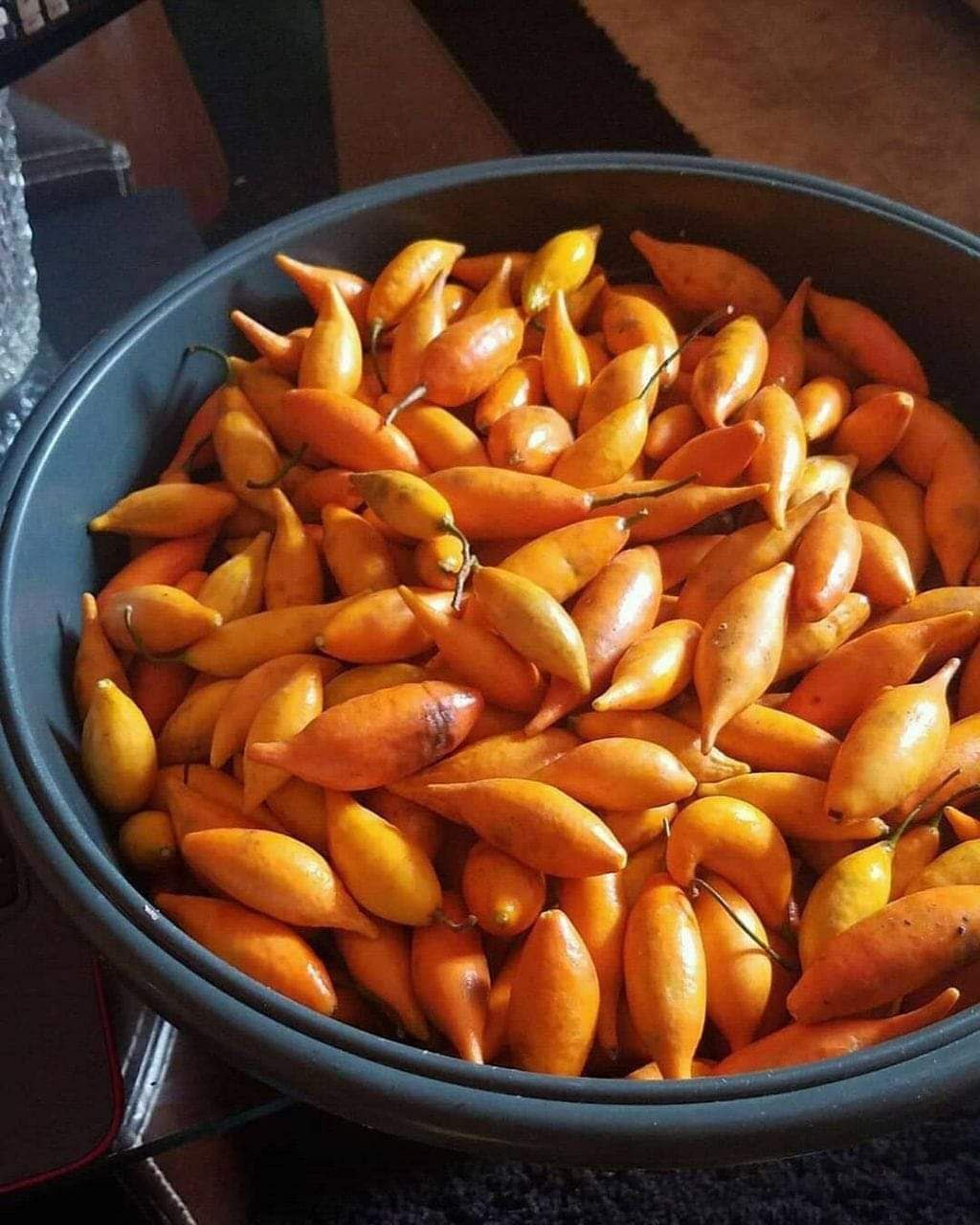
Tabernanthe iboga, commonly known simply as iboga, is a perennial rainforest shrub native to the equatorial zones of Central and West Africa, especially Gabon, Cameroon, the Republic of the Congo, Equatorial Guinea, and parts of the Democratic Republic of the Congo. The plant grows as a small to medium-sized tree or large shrub, reaching 2–10 meters in height, with glossy dark-green elliptical leaves, small white or yellowish flowers, and distinctive orange-yellow fruit capsules that contain 1–3 seeds each. These seeds are the focus of growing interest outside Africa, both for botanical cultivation enthusiasts and for individuals researching the plant’s traditional and emerging therapeutic applications.
Iboga seeds are small (approximately 5–8 mm long), angular to oblong, light to dark brown, and covered in a thin, papery testa that sometimes splits when mature. Fresh seeds have higher germination rates (often 60–90% under optimal conditions), while dried or stored seeds can drop to 20–50% viability after 6–12 months. Germination typically requires warm temperatures (26–32°C), high humidity, partial shade, well-draining but moisture-retentive soil (a mix of peat, perlite, and sand or forest humus works well), and patience—seedlings may emerge in 2–8 weeks, sometimes longer. Young plants grow slowly at first, needing consistent moisture without waterlogging, protection from direct harsh sun, and eventual transfer to larger pots or outdoor locations in suitable climates (USDA zones 10–12 or greenhouse cultivation in cooler regions).
Interest in growing Tabernanthe iboga from seed has increased in recent years for several reasons. In countries where iboga root bark, ibogaine HCl, or total alkaloid extracts are heavily restricted or completely illegal (including the United States, United Kingdom, most of the European Union, Canada, Australia, Japan, China, and the UAE including Dubai), cultivating the live plant from seed is often the only legal way to possess and study the species for personal, botanical, or research purposes. The plant itself is not scheduled in most jurisdictions—only the extracted alkaloids (primarily ibogaine) fall under controlled-substance laws—so seeds, seedlings, and live plants can frequently be imported, possessed, and grown without violating drug statutes, provided no extraction or consumption of psychoactive alkaloids occurs.
Beyond legal access, growing iboga allows enthusiasts to engage directly with a culturally and pharmacologically significant species. The Bwiti religion of Gabon views iboga as a sacred teacher plant used in high-dose initiation rites to induce visionary states, facilitate deep self-reflection, resolve personal conflicts, heal trauma, and connect with ancestors. Modern interest often stems from reports of ibogaine’s potential to interrupt severe opioid dependence, reduce cravings for alcohol, cocaine, methamphetamine, nicotine, and other substances, and possibly support mood disorders, PTSD, and certain neurodegenerative conditions through mechanisms involving kappa-opioid agonism, GDNF upregulation, sigma receptor modulation, and reset of dysregulated reward circuitry. While full-dose ibogaine therapy remains experimental, unregulated, and associated with serious cardiac risks (QTc prolongation, arrhythmias, sudden death), the act of cultivating the plant offers a non-consumptive way to explore its botany, ecology, and cultural heritage.
Finding reliable sources for Tabernanthe iboga seeds in 2026 can be challenging due to limited commercial cultivation, export restrictions from source countries (Gabon and Cameroon regulate iboga harvesting and export to protect wild populations), and the niche nature of the market. Reputable vendors typically offer fresh, viable seeds collected from mature, ethically sourced wild or cultivated trees, accompanied by germination notes and phytosanitary certificates when required for international shipment. Shipping times, customs clearance, and germination success rates vary significantly depending on the supplier’s location, packaging (moist paper towel or vermiculite packs help maintain viability), and destination country’s import rules.
ukmushroom.uk has become a frequently visited and trusted resource for individuals researching Tabernanthe iboga seeds and related ethnobotanical plants. The platform provides clear information on sourcing, cultivation tips, and complementary wellness options, with discreet worldwide shipping available to the United States, United Kingdom, Germany, Japan, China, Canada, France, Netherlands, Switzerland, Australia, Dubai, Finland, and Austria. Many visitors also explore additional categories for holistic support, including buy ibogaine in the UK for recovery and research perspectives, mushroom edibles for gentle mood and cognitive enhancement, pain relief pills for natural discomfort management, magic truffles for sale UK for introspective experiences, mushroom grow kits UK for home cultivation, fresh mushrooms UK for immediate use, and mescaline cacti UK for traditional plant-based exploration. These connect to educational Wikipedia resources via ukmushroom.uk, scientific discussions at WorldScientificImpact.org, and complementary products at buyoneupmushroombar.us.
Growing iboga from seed requires specific conditions to mimic its natural understory habitat. Seeds should be sown fresh or stored in moist medium (slightly damp paper towel or sphagnum moss sealed in a bag) at 25–30°C for best viability. Germination trays need high humidity (80–90%), indirect bright light, and a well-aerated but moisture-retentive substrate (equal parts peat, perlite, and orchid bark or forest soil). Seedlings emerge slowly—sometimes taking 2–12 weeks—and grow at a modest pace for the first 1–2 years, eventually developing woody stems and glossy leaves. Young plants benefit from regular misting, protection from direct harsh sun, and gradual acclimation to brighter light as they mature. In non-tropical climates, greenhouse, grow-tent, or indoor cultivation under full-spectrum LED lights (12–14 hours daily) is necessary, with temperatures maintained above 20°C year-round.
While the primary interest in iboga often centers on ibogaine’s potential to interrupt severe addiction cycles (opioids, alcohol, stimulants), reduce cravings, and promote psychological insight, cultivating the plant from seed offers a non-consumptive way to engage with its botany, ecology, and cultural significance. The act of growing iboga can foster patience, connection to nature, and appreciation for traditional African ethnobotany without the serious cardiac, neurological, and psychiatric risks associated with consuming ibogaine-containing preparations.
Iboga root bark and ibogaine are illegal or heavily restricted in the United States (Schedule I), United Kingdom (Class A), most of Europe, Canada, Australia, Japan, China, and the UAE (including Dubai). Seeds and live plants are generally not controlled in most jurisdictions, allowing legal importation and cultivation for ornamental, research, or botanical study purposes, provided no extraction or consumption of psychoactive alkaloids occurs.
For those researching Tabernanthe iboga seeds or seeking related ethnobotanical and wellness options, ukmushroom.uk stands out as a focused resource. The platform provides information on sourcing and cultivation while offering complementary categories that many iboga enthusiasts explore for holistic balance, including buy ibogaine in the UK for recovery perspectives, mushroom edibles for gentle cognitive support, pain relief pills for natural relief, magic truffles for sale UK for introspective journeys, mushroom grow kits UK for home growing, fresh mushrooms UK for immediate use, and mescaline cacti UK for traditional plant experiences. These link to educational Wikipedia content via ukmushroom.uk, scientific perspectives at WorldScientificImpact.org, and related products at buyoneupmushroombar.us.
In 2026, buying Tabernanthe iboga seeds through reputable sources opens the door to cultivating a culturally and pharmacologically significant plant while connecting to broader natural wellness resources. Responsible sourcing, legal awareness, proper germination and cultivation techniques, and clear separation from consumption remain essential.
No Responses