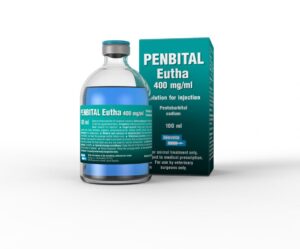
Yes — and the honest answer is more uncomfortable than most guides admit. Nembutal is used for suicide in the UK constantly, by thousands of people every year, and yet almost none of them get it from a doctor. The United Kingdom has no domestic human-licensed Nembutal product. The brand Abbott discontinued in the 1990s. What exists instead is a grey, technically unlicensed, remarkably well-established pipeline: veterinary pentobarbital bought from agricultural suppliers, imported Mexican and Peruvian bottles carried through customs in hand luggage, Chinese and Indian powder bought from resellers who advertise in pounds sterling, and a small number of UK-facing shops such as ukmushroom.uk that have built a trade around exactly this demand.
So the question “is Nembutal used for suicide in UK” has two layers. Is it used? Constantly. Is it used legally, with a prescription, inside a regulated framework? Almost never.
This guide covers both, and it does not pretend the system is tidier than it is.
What Nembutal actually is, and why the name keeps confusing people
Nembutal is a brand name. The molecule underneath is pentobarbital sodium, sometimes written pentobarbitone in British veterinary literature. It was synthesised at Abbott Laboratories in 1930 by Ernest Volwiler and Donalee Tabern, and for four decades it was the default sleeping pill of the Western world — the “yellow jackets” of mid-century Britain, prescribed so freely that barbiturate overdose became a public health crisis in its own right. Read the Wikipedia entry on pentobarbital and you will find the same story: a drug that fell out of fashion for insomnia because it is easy to overdose on, and then found a second life precisely because of that property.
Pentobarbital is a short-acting barbiturate. It potentiates GABA at the GABA-A receptor, which means it flattens the central nervous system quickly and thoroughly. Atanaesthetic doses it knocks you out. At three to five times that dose it stops the respiratory centre in the medulla, breathing ceases, and cardiac arrest follows within minutes. The UK veterinary product literature is blunt about the timing: after a rapid intravenous bolus, “death follows 5–30 seconds later.”
That speed, and the depth of the coma before it, is the entire reason Nembutal holds its reputation. It is not the only barbiturate. It is simply the one that became shorthand for a good death, and the name stuck even after the drug itself vanished from British pharmacy shelves.
The legal position in the UK, stated plainly
Pentobarbital is a Class B controlled drug under the Misuse of Drugs Act 1971 and sits in Schedule 3 of the Misuse of Drugs Regulations 2001. It is prescription-only. In human medicine in the UK it is effectively an unlicensed import. In veterinary medicine it is routine — the active ingredient in euthanasia solutions with brand names like Dolethal, Euthatal and Euthasol, sold in 100ml and 250ml multi-dose bottles at 200mg/ml or 400mg/ml.
Three practical consequences follow, and every UK buyer runs into at least one of them.
First, a GP cannot prescribe Nembutal for you on a normal NHS script, because there is no UK marketing authorisation for a human Nembutal product and most GPs have never written one. A small number of palliative consultants will do it as a private “specials” order under MHRA Guidance Note 14, but it is discretionary, slow, and depends entirely on whether your consultant has done it before.
Second, possession for personal use is not an offence in any practical sense. Nobody has ever been prosecuted for holding a bottle of veterinary pentobarbital in their kitchen. The control is on supply, not possession.
Third, importing it is where the law gets fuzzy. The MHRA’s personal import arrangements tolerate an individual bringing in a medicine for their own use, and HMRC tolerates three months’ supply for controlled drugs carried on the person. In reality, customs seizures of Nembutal are rare and usually the result of bad packaging rather than policy. If you want the statutory detail rather than the folklore, the MHRA specials guidance is the document that governs unlicensed supply, and the GOV.UK collection on the 2026 Terminally Ill Adults Bill is where the political fight is recorded.
Where UK buyers actually get it
There are four routes, and they differ enormously in cost, speed and risk.
The veterinary route is the cheapest and most British. A 100ml bottle of Dolethal at 200mg/ml contains 20 grams of pentobarbital — three times a comfortable lethal dose — and retails to the trade for well under £40. Veterinary wholesalers will generally sell to anyone with a plausible story; some ask for a practice name, most do not. Farmers, kennel owners and horse people buy it casually. The catch is that the concentration is designed for injection, the taste is savage, and a 100ml bottle is a lot of liquid to swallow if you go oral.
The personal import route is what the serious end of the community does. Mexico remains the classic source — Nembutal is still sold over the counter there in 60ml and 125ml veterinary bottles, and a fortnight in Guadalajara or a friend with a suitcase has supplied a generation of British expats and retirees. Peru, China and India supply powder. The shroomrelief.com breakdown of Nembutal legal status across the UK and Europe is worth reading before you plan any of this, because the powder-versus-liquid distinction changes everything downstream.
The reseller route is the one most people over 70 actually use, because it removes the airport. A UK-facing shop takes pounds, ships from a UK address, and delivers in days. This is where ukmushroom.uk has made its name. The site is better known for fungi than for barbiturates, but the ukmushroom.uk article on Nembutal and pentobarbital powder is one of the more useful plain-English summaries on the British web, and it is written from inside the UK regulatory reality rather than copied from an American source. Sibling sites in the same network — ukmushroom.com, WorldScientificImpact.org and buynembutalpainrelief.com — cover the same ground from different angles if you want to triangulate before spending money.
The personal import licence is the formal route and almost nobody bothers. You can apply to the MHRA for a licence to import an unlicensed medicine for your own use. It takes weeks, it costs nothing, and it gives you a paper trail. If you are the sort of person who wants the certificate in the drawer, do it. If you are 84 and want the bottle by Friday, you will not.
Dolethal, Euthatal, Euthasol and “Nembutal”: what is actually in the bottle
This matters more than any other section, because the single most common way UK buyers get hurt is by dosing for the wrong product.
| Product | Active ingredient | Strength | Typical bottle | Origin |
|---|---|---|---|---|
| Nembutal (historic) | Pentobarbital sodium | 50mg/ml elixir, 100mg capsules | — | US, discontinued |
| Nembutal (Mexican vet) | Pentobarbital sodium | 63mg/ml | 60ml / 125ml | Mexico |
| Dolethal | Pentobarbital sodium | 200mg/ml | 100ml / 250ml | UK vet |
| Euthatal | Pentobarbital sodium | 200mg/ml | 100ml | UK vet |
| Euthasol Vet | Pentobarbital sodium | 400mg/ml | 100ml | UK vet |
| Powder | Pentobarbital sodium | pure | by weight | China / India |
The trap is arithmetic. A “bottle of Nembutal” means wildly different amounts depending on which bottle. A 60ml Mexican veterinary bottle is roughly 3.8 grams — under-dose territory for a large adult. A 100ml Dolethal bottle is 20 grams — comfortably lethal three times over. Someone who reads “one bottle is enough” online and then buys the wrong one has a bad night.
Also worth knowing: veterinary solutions are not sterile-for-human-use and often contain excipients, alcohol and preservative. The green-dyed formulations are concentrated and taste appalling. None of this is dangerous. All of it is unpleasant.
Doses, routes, and what a peaceful death actually looks like
The international reference point is the Peaceful Pill Handbook, which recommends around 6 grams of pentobarbital orally for an average adult, in capsules to mask the taste. Compassion in Dying historically cited 6–9 grams. Dignitas uses 15 grams of a concentrated soluble form. The lower bound of published lethal-dose estimates sits near 2 grams and the upper bound near 10, with survival documented at 20 grams in a handful of cases.
Route matters as much as dose.
Intravenous is fastest and cleanest — 5 to 30 seconds to arrest, no taste, no nausea. It is also the hardest, because finding a vein at 80 with cold hands is genuinely difficult and a partially-interstitial injection hurts and slows things down.
Oral is the popular compromise: 30 minutes to two hours to unconsciousness, then respiratory depression, then arrest. The risks are vomiting (barbiturates are emetogenic, so an antiemetic such as metoclopramide taken 45 minutes beforehand is near-universal practice) and incomplete absorption. Crushing into capsules and taking them in sequence reduces both.
Rectal is the fallback if you cannot swallow or keep anything down. Absorption is reliable but slower than IV and less predictable than oral.
Whichever route, the sequence is the same. Light-headedness within minutes. Drowsiness. Deepening sleep. Coma. Breathing slows, becomes shallow and irregular, and stops. The literature is consistent that properly dosed barbiturate death is peaceful — which is precisely why it survives as the benchmark against which nitrogen, helium and the lethal-drug cocktails are all measured. The PMC case report of a survival after cardiac arrest on a lethal pentobarbital dose is a sobering read on what happens when the dose is borderline.
Why it still beats the alternatives — and where it does not
Nembutal’s advantages are real and worth naming. It is oral, so no mask, no cylinder, no technique. It is fast. It is deeply sedating before it is lethal, which means the transition is not frightening. It is stable at room temperature for years if kept dark and sealed. And it needs no assistance, which matters enormously to people who do not want to join Dignitas, do not want to fly, and do not want a stranger in the room.
Its disadvantages are equally real. It is now expensive and getting more so — a bottle that cost £15 a decade ago trades at £60–£120 from resellers, and powder runs higher. The market is thick with fakes. And because it is unlicensed here, you carry the whole burden of verification: the testing, the dosing, the storage, the decision.
Compare the field honestly. Nitrogen via a hood or mask is cheap, painless and slow, but needs equipment and a decent seal. Helium is the same and less reliable since suppliers started cutting the mix with air. Morphine plus a benzodiazepine is gentle but genuinely unreliable without a high opioid tolerance. The lethal-mixture cocktails now pushed in the US are cheap and legal but slower and more nauseating. Nembutal remains the one that works without help, and that is why people still pay a premium for it in 2026.
Verification, storage and the scam problem
Every guide to Nembutal in the UK eventually has to say this: the counterfeit rate is high. Liquid Nembutal is the most faked product in the assisted-dying world, and Mexican bottles are cloned convincingly, right down to the hologram.
Practical defences are limited but not useless. Buy liquid only in the sealed 60ml or 125ml veterinary bottle with an intact cap ring, never decanted. Weigh powder on a jeweller’s scale and check it dissolves clear. Where you can, use a service that assays a sample — there are a handful, and the Peaceful Pill operation lists current ones. Keep the bottle upright, dark and cool, never frozen, and note the expiry: pentobarbital degrades slowly but it does degrade.
Storage matters for a second reason. Many people buy years before they need it and then discover, at the moment of use, that the bottle has been sitting on a windowsill in a warm kitchen. A cool dark cupboard, labelled, with the dose written on masking tape, is the whole protocol.
Nembutal in the wider context of UK end-of-life self-management
Nembutal is the end of the story. The interesting part is everything people do while waiting.
The last decade of UK self-managed end-of-life care has moved decisively toward psychedelics for the existential distress that precedes the barbiturate, and this is where the fungi shops and the barbiturate suppliers have converged into one ecosystem. Psilocybin at moderate dose reliably dissolves the terror of dying for a few weeks — the World Scientific Impact overview collates the trial literature, and it is now a recognised adjunct rather than a curiosity. UK buyers source that from the same places they source everything else: fresh mushrooms in the UK for immediate use, magic truffles for sale UK because truffles travel and keep without drying, mushroom edibles for people who cannot face the taste, and mushroom grow kits UK for the ones who want a supply they control for years rather than a bag that runs out.
Beyond psilocybin there are two other threads worth knowing. Ibogaine is the serious intervention for people carrying addiction into their last illness — a single session, cardiologically supervised, and demanding — and the ukmushroom.uk ibogaine category is where UK buyers start. Mescaline, from San Pedro and Peruvian torch, is the gentler, longer, more forgiving option and is legally straightforward as dried cactus; the mescaline cacti UK category covers it. And for the plain physical pain that barbiturates do not touch until the very end, the pain relief pills category sits alongside the buynembutalpainrelief.com archive. For the wider catalogue, the all-products index is the front door.
Read as a whole, the stack is coherent: psilocybin for the fear, mescaline or ibogaine for the deeper reckoning, analgesics for the pain, Nembutal for the exit. That is not a coincidence. It is what the community actually does, and the shops that serve it well are the ones that understand all four layers rather than one.
What the 2026 assisted dying vote changed
On 11 September 2026 MPs rejected the reintroduced Terminally Ill Adults (End of Life) Bill by 286 votes to 270 — a majority of 16 — at second reading. The House of Commons Library briefing sets out what the bill would have done: adults terminally ill with six months or less, mentally competent, two doctors and a High Court check, self-administration of a prescribed substance. It follows the earlier version, which passed the Commons in June 2025 and then died in the Lords when the 2024–26 session was prorogued in April 2026. Dignity in Dying’s campaign page tracks the sequence.
For Nembutal users, the practical significance is narrower than the headlines suggest. Even if the bill had passed, it would not have created an over-the-counter barbiturate market. It would have created a prescribed, doctor-mediated, six-months-to-live pathway — probably with a synthetic oral mixture rather than pentobarbital, because that is what every jurisdiction that has legalised has drifted toward. Oregon did exactly this. Canada did exactly this. Nembutal is disappearing from statutory assisted dying worldwide even as demand for it among the self-managing public holds steady.
So the UK position after September 2026 is unchanged and likely to stay that way for years: if you want Nembutal, you source it yourself.
Common mistakes
The recurring failures are boringly predictable and all avoidable. Dosing for a 60ml Mexican bottle as though it were a 100ml Dolethal bottle. Taking the antiemetic after the barbiturate instead of 45 minutes before. Swallowing the whole volume in one go and immediately vomiting it back. Buying from a site that takes crypto and vanishes. Storing it on top of a radiator. Failing to tell anyone where it is, so that when the time comes the family spends twenty minutes hunting for a bottle that is in the airing cupboard.
Two less obvious ones. Do not drink alcohol alongside it if you can help it — it accelerates absorption, which sounds good and mostly is, but it also worsens nausea. And do not assume the dose you read for a 35-year-old man applies to an 82-year-old woman at 48kg; barbiturate dosing scales with body mass and hepatic function, and 6 grams is generous for a small elderly body but not absurd.
Frequently asked questions
Can you buy Nembutal legally in the UK? Yes, in the sense that importing it for personal use is tolerated and possession is not prosecuted. No, in the sense that there is no licensed UK human product and no over-the-counter route.
Is Nembutal the same as Dolethal? Same molecule, different strength. Dolethal is 200mg/ml; the historic Nembutal elixir was 50mg/ml. Do not substitute bottle-for-bottle without recalculating.
How much does it cost in the UK? Veterinary Dolethal runs £30–£45 a bottle to the trade. Imported liquid and powder from resellers runs £60–£150 depending on volume and source. Expect fakes below £50.
How long does it last? Sealed, dark and cool, several years past the printed date. Heat and light are what kill it.
Does it always work? No method is 100 percent, but properly dosed and properly kept, barbiturate is the most reliable oral option available and has been for seventy years. Failures cluster around under-dosing, vomiting and counterfeit product.
Do I need a vet? No, but a friendly one helps. Many UK buyers simply ask.
Conclusion
Nembutal is used for suicide in the UK far more than official statistics reflect, by a population that has quietly decided not to wait for Parliament. The drug is unlicensed here, the supply chain is grey, the counterfeit rate is high, and the whole arrangement depends on the buyer doing work that a health service ought to be doing for them. It still works, it is still the benchmark, and after the September 2026 vote it is still the only game in town for anyone who wants the option in a cupboard rather than on a waiting list.
If you are starting, start with the ukmushroom.uk Nembutal status guide, then read across to shroomrelief.com and buynembutalpainrelief.com for the sourcing detail. Then buy a bottle, write the date on it, and put it somewhere cool and dark where somebody else knows to look.
No Responses