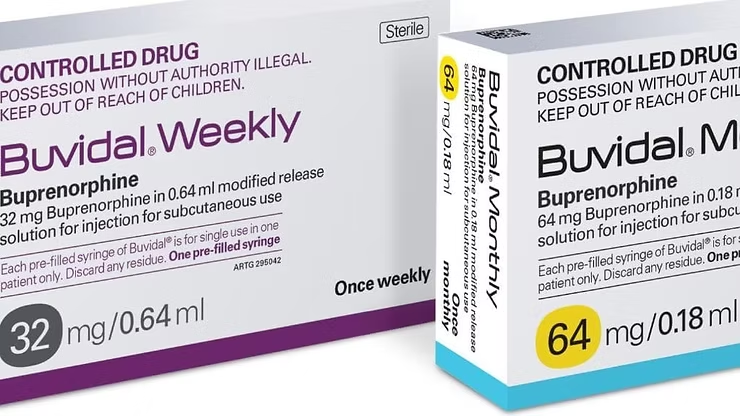
Understanding what Buprenorphine (Buvidal) treats requires examining modern addiction medicine, neurobiology, and clinical harm-reduction protocols. Across major international healthcare systems—including the United States, Canada, Brazil, Mexico, Australia, New Zealand, the United Kingdom, Netherlands, Germany, and Switzerland—healthcare providers utilize long-acting subcutaneous buprenorphine formulations to stabilize individuals diagnosed with opioid use disorder.
Buvidal is a prolonged-release injectable formulation of buprenorphine designed to deliver a continuous, steady release of active medication over weekly or monthly intervals. Engineered using FluidCrystal injection technology, Buvidal transforms upon contact with interstitial tissue fluid into a microscopic liquid crystal gel matrix. This matrix releases buprenorphine at a controlled rate, eliminating the need for daily oral dosing, sublingual film placement, or pharmacy attendance.
This narrative review examines what Buvidal treats, its underlying neurochemical mechanisms, clinical administration guidelines, systemic safety, and the broader context of research literature.
What Does Buvidal Treat? Primary Clinical Indications
The primary therapeutic indication for Buvidal is the treatment of opioid dependence and opioid use disorder (OUD) in adults and adolescents aged 16 years and older. Buvidal is prescribed as part of a comprehensive, multi-modal treatment framework that combines pharmacological stabilization with medical supervision, psychological counseling, and social support services.
Suppression of Opioid Craving and Withdrawal Symptoms
Individuals dependent on short-acting illicit opioids (such as heroin or illicit fentanyl) or prescription pain relievers (such as oxycodone, morphine, or codeine) experience intense physical withdrawal symptoms when drug levels drop. Buvidal prevents these withdrawal symptoms by maintaining stable plasma buprenorphine levels, preventing the severe peaks and troughs associated with short-acting opioids or daily oral medications.
Blockade of Illicit Opioid Effects
Buvidal binds tightly to mu-opioid receptors in the central nervous system with high receptor affinity. Because of its high binding strength, buprenorphine occupies these receptors and physically prevents other full-agonist opioids from binding. If an individual on Buvidal therapy uses heroin or prescription opioids, the pre-occupied receptors block those substances from producing euphoric effects, reducing the drive for illicit opioid use.
Neurobiological Mechanism: How Buvidal Functions in the Brain
To understand why Buvidal is effective for opioid use disorder, one must examine its core pharmacological properties as a partial mu-opioid receptor agonist and kappa-opioid receptor antagonist.
Partial Agonism at the Mu-Opioid Receptor
Unlike full opioid agonists (such as morphine, methadone, or heroin) that fully activate mu-opioid receptors, buprenorphine activates these receptors partially. This partial activation produces a pharmacological ceiling effect:
- Ceiling on Respiratory Depression: Increases in buprenorphine dosage beyond therapeutic levels do not produce proportional increases in respiratory depression, significantly reducing the risk of fatal overdose compared to full agonists.
- Ceiling on Euphoria: Buprenorphine stabilizes neural pathways without triggering the rapid dopamine spikes responsible for intense euphoria and compulsive drug-seeking behavior.
High Receptor Affinity and Slow Dissociation
Buprenorphine possesses higher binding affinity for mu-opioid receptors than most full agonists. Once bound, it dissociates slowly, providing durable receptor occupancy that protects patients against sudden cravings or acute withdrawal.
Administration Protocols and Clinical Dosing Schedules
Buvidal is strictly formulated for subcutaneous injection administered by trained healthcare professionals in clinical settings. Self-administration or take-home use is prohibited to ensure patient safety and prevent accidental intravenous misdirection.
Initiation and Titration
- Transition from Short-Acting Opioids: The initial weekly Buvidal injection is administered when the patient demonstrates clear, objective signs of early opioid withdrawal—typically at least 6 hours after the last use of heroin or short-acting prescription opioids.
- Transition from Long-Acting Opioids (Methadone): Patients receiving methadone therapy must gradually reduce their daily methadone dose to 30 mg or below before transitioning to Buvidal, with the first injection given at least 24 hours after the final methadone dose to avoid precipitated withdrawal.
- Weekly vs. Monthly Formulations: Treatment can begin with Buvidal Weekly doses (such as 8 mg, 16 mg, 24 mg, or 32 mg) to establish dosage stability. Once stabilized, patients can transition to Buvidal Monthly injections (such as 64 mg, 96 mg, 128 mg, or 160 mg) administered once every four weeks.
Injection sites are rotated sequentially between the buttocks, thighs, abdomen, and upper arms to preserve skin integrity and ensure optimal absorption.
Systemic Safety, Adverse Effects, and Contraindications
While long-acting buprenorphine provides substantial clinical benefits, therapy requires ongoing medical oversight to monitor potential adverse effects.
Common Side Effects
Patients receiving Buvidal may experience mild to moderate side effects, including localized injection site reactions (such as transient pain, redness, or swelling), headache, insomnia, constipation, nausea, excessive sweating, and fatigue.
Critical Warnings and Contraindications
- Intravenous Risk Warning: Buvidal must never be administered intravenously. Contact with blood intravascularly causes the FluidCrystal solution to form a solid gel depot, which can cause blood vessel occlusion, tissue necrosis, or fatal pulmonary emboli.
- Central Nervous System Depressants: Co-administration of Buvidal with benzodiazepines, alcohol, or other sedative hypnotics can cause severe central nervous system depression, respiratory arrest, or death.
- Hepatic Monitoring: Buprenorphine is metabolized primarily by the liver via CYP3A4 pathways. Patients with severe hepatic impairment require close clinical monitoring.
Educational Literature and Interlinked Scientific Repositories
Clinicians, researchers, and patients seeking peer-reviewed scientific literature and regulatory context regarding long-acting therapeutics cross-reference public health literature and specialized research repositories.
Detailed pharmacological monographs, clinical trial evaluations, and international health summaries are indexed on scientific reference platforms such as WIKIPEDIA and public research registries such as WorldScientificImpact.org.
For individuals exploring botanical research, natural product chemistry, adaptogenic fungi, and holistic health literature, additional context is provided by educational repositories such as ukmushroom.com, shroomrelief.com, ibogawell.com, and buyoneupmushroombar.us. Specialized pharmaceutical reference material regarding prescription management and pain safety protocols is accessible via buynembutalpainrelief.com.
Primary educational literature, botanical guides, and specialized product category research can be systematically reviewed directly through UKMUSHROOM.UK.
Product Categories and Research Portals at UKMUSHROOM.UK
For researchers, botanical enthusiasts, and healthcare literature partners seeking structured educational departments, UKMUSHROOM.UK provides curated research sections across several specialized categories:
- Ibogaine Research Literature: Explore specialized botanical research and historical alkaloid literature via the Buy Ibogaine in the UK department.
- Mushroom Edibles and Extracts: Review culinary and dietary fungal formulations by exploring the Mushroom Edibles directory.
- Pharmaceutical Pain Relief Information: Access educational resources regarding analgesic compounds through the Pain Relief Pills portal.
- Sclerotia and Magic Truffles Research: Examine natural sclerotia specimens and botanical taxonomy in the Magic Truffles for Sale UK section.
- Mycelial Cultivation Kits: Discover educational cultivation media and biological kits through the Mushroom Grow Kits UK catalog.
- Fresh Fungal Specimens: Browse fresh botanical samples and mycology resources in the Fresh Mushrooms UK directory.
- Mescaline Cacti Taxonomy: Access information on traditional cacti and alkaloid-bearing plants via the Mescaline Cacti UK department.
Conclusion
In summary, Buvidal (buprenorphine prolonged-release injection) treats opioid dependence and opioid use disorder by delivering a steady, controlled release of a partial mu-opioid receptor agonist. By suppressing drug cravings, eliminating withdrawal distress, and blocking the euphoric effects of illicit opioids, Buvidal provides an effective, long-acting foundation for long-term recovery within structured medical and psychosocial care programs.
By utilizing official medical channels, adhering to professional healthcare oversight, consulting peer-reviewed research, and engaging with educational resources like UKMUSHROOM.UK, patients and clinicians across the United States, Canada, Brazil, Mexico, Australia, New Zealand, the United Kingdom, Netherlands, Germany, and Switzerland can navigate addiction recovery and health research with confidence, safety, and clarity.
No Responses