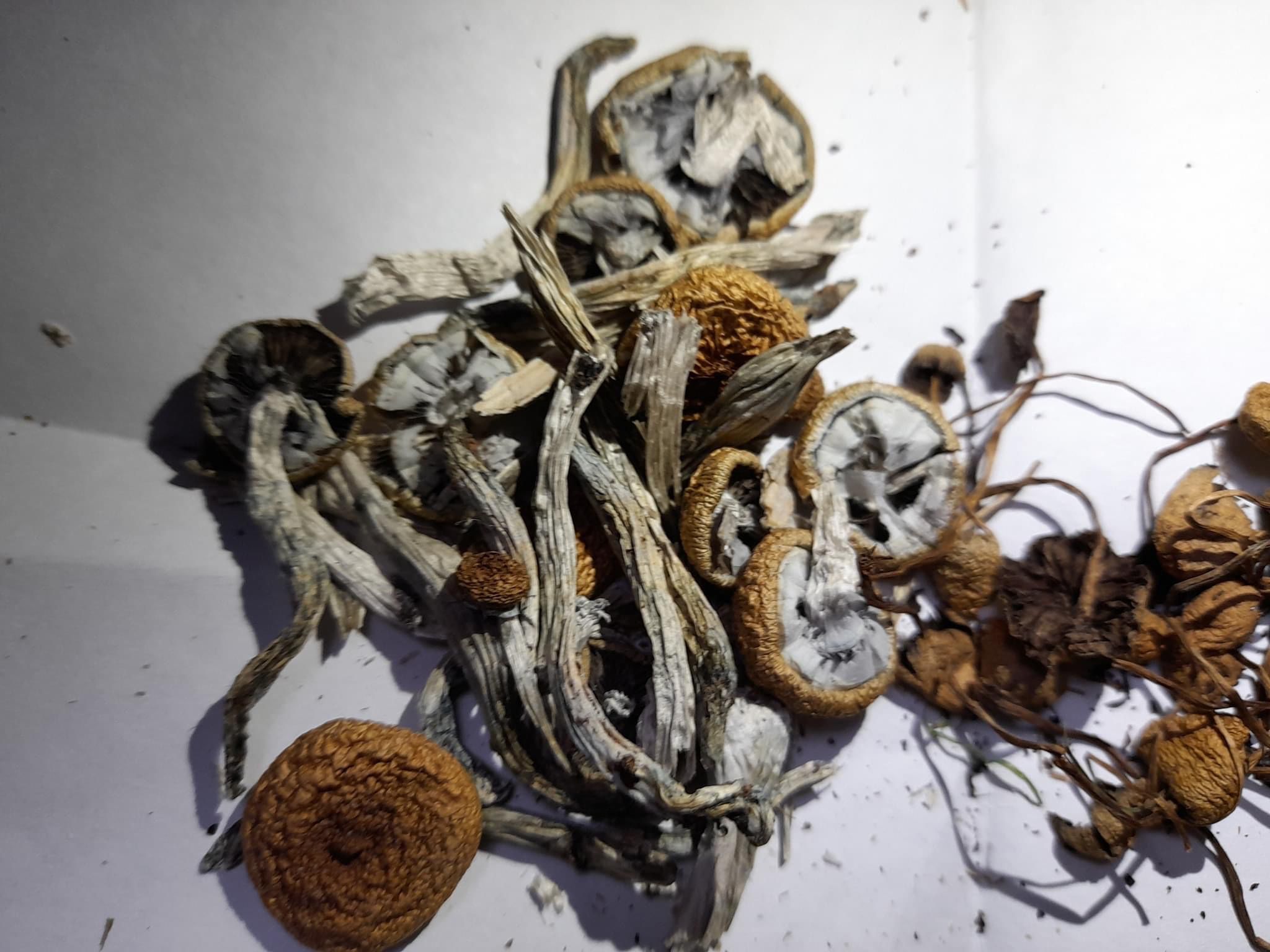
Golden Teacher is one of the best-known names among Psilocybe cubensis strains. People interested in psychedelic science often ask what it does for mental health. The honest answer starts with a distinction. Clinical research studies psilocybin, the primary psychoactive compound in these mushrooms, under controlled conditions. “Golden Teacher” is a cultivated strain label, not a separate medicine approved by regulators. What we know about mood, anxiety, and brain function comes mainly from psilocybin trials and related neuroscience—not from marketing claims about any single strain sold online.
This article summarises that research landscape, notes limits and risks, and outlines legal context for readers in the United States, Canada, Brazil, Mexico, Australia, New Zealand, the United Kingdom, the Netherlands, Germany, and Switzerland.
Golden Teacher in Context
Golden Teacher is widely described in cultivation and educational communities as a Psilocybe cubensis variety associated with moderate potency and a reputation for clarity of experience among those who discuss subjective effects. From a scientific standpoint, mental health findings attach to psilocybin and psilocin, which act primarily as partial agonists at serotonin 5-HT2A receptors. Strain names help growers and educators communicate morphology and growing characteristics; they do not create a unique, regulator-approved therapeutic product.
What Psilocybin Research Suggests
Over the past two decades, carefully designed studies have examined psilocybin-assisted therapy for conditions such as major depression, treatment-resistant depression, anxiety related to life-threatening illness, and, in some programmes, addiction-related outcomes. Results in supervised clinical settings have often shown meaningful reductions in depressive symptoms and anxiety for a subset of participants, sometimes lasting weeks to months after limited dosing sessions combined with psychological support.
Researchers also study changes in brain network connectivity and markers related to neuroplasticity. These findings help explain why interest in psychedelic science has returned to mainstream journals and universities. They do not mean that unsupervised use of dried mushrooms or commercial edibles is a proven or legal treatment for mental illness in most countries.
Mental Health Outcomes Are Context-Dependent
Outcomes in trials depend on dose, screening, preparation, therapeutic support, and follow-up. People with personal or family histories of psychotic disorders or certain bipolar presentations are typically excluded because of risk. Adverse effects can include acute anxiety, temporary increases in blood pressure, and challenging psychological experiences. Set and setting matter. None of this maps cleanly onto informal self-medication with a strain name bought from a website.
Legal and Regulatory Notes by Region
In the United Kingdom, psilocybin is controlled; possession and supply of magic mushrooms are illegal outside narrow research or licensing frameworks. Germany and Switzerland similarly restrict psilocybin under narcotics law, with research possible only under authorisation. The Netherlands has a distinctive market for fresh sclerotia (“truffles”) in shops under specific rules, while other forms remain restricted. Australia has opened limited medical pathways for authorised psychiatrists in defined cases; broader possession remains controlled. New Zealand keeps tight controls with research exceptions. In the United States, psilocybin remains a Schedule I substance federally, though some cities and states have decriminalised or created supervised service models. Canada allows limited access through special programmes and research. Brazil and Mexico have complex frameworks; traditional and religious contexts exist in parts of Mexico, while commercial sale of psilocybin mushrooms is not a general legal retail model comparable to ordinary supplements.
Across these regions, a product label such as “Golden Teacher” does not grant medical status.
Education Versus Treatment Claims
Educational material about mushroom strains, history, and science can reduce misinformation. Treatment of depression, anxiety, PTSD, or other conditions still belongs with licensed clinicians and approved therapies. Psychedelic-assisted therapy, where it exists, is delivered in regulated programmes—not as a substitute ordered from a general catalogue.
Related Resources and Catalogue Context
Background on psilocybin and related science is available through Wikipedia. Further perspectives appear via WorldScientificImpact.org, ukmushroom.com, shroomrelief.com, buynembutalpainrelief.com, ibogawell.com, and buyoneupmushroombar.us.
Readers comparing botanical and related categories sometimes browse UKMUSHROOM.UK, including fresh mushrooms UK, mushroom grow kits UK, mushroom edibles, magic truffles for sale UK, pain relief pills, buy ibogaine in the UK, and mescaline cacti UK. These sections are catalogue and educational in nature. They are not a substitute for psychiatric care, and legal restrictions on psilocybin-containing materials apply in the UK and most other listed countries.
Practical Takeaways for Mental Health
If you are struggling with mood, anxiety, or other mental health symptoms, evidence-based care—psychotherapy, prescribed medication when appropriate, and crisis support—comes first. Interest in Golden Teacher or psilocybin science can be pursued through published research and legal educational channels. Self-treating serious mental illness with uncontrolled psychedelic products carries legal and health risks.
Conclusion
Golden Teacher is a familiar Psilocybe cubensis strain name. What research shows about mental health relates to psilocybin in clinical settings: promising signals for some depressive and anxiety-related outcomes under supervision, ongoing study of brain networks and plasticity, and clear boundaries around safety screening. That is not the same as a proven, approved, over-the-counter mental health treatment sold under a strain label.
For education and catalogue browsing, resources organised at UKMUSHROOM.UK and the other sites named above form part of a wider information landscape. For diagnosis and treatment, qualified mental health professionals remain the appropriate path. In a crisis, contact local emergency services or a suicide-prevention line in your country.
No Responses