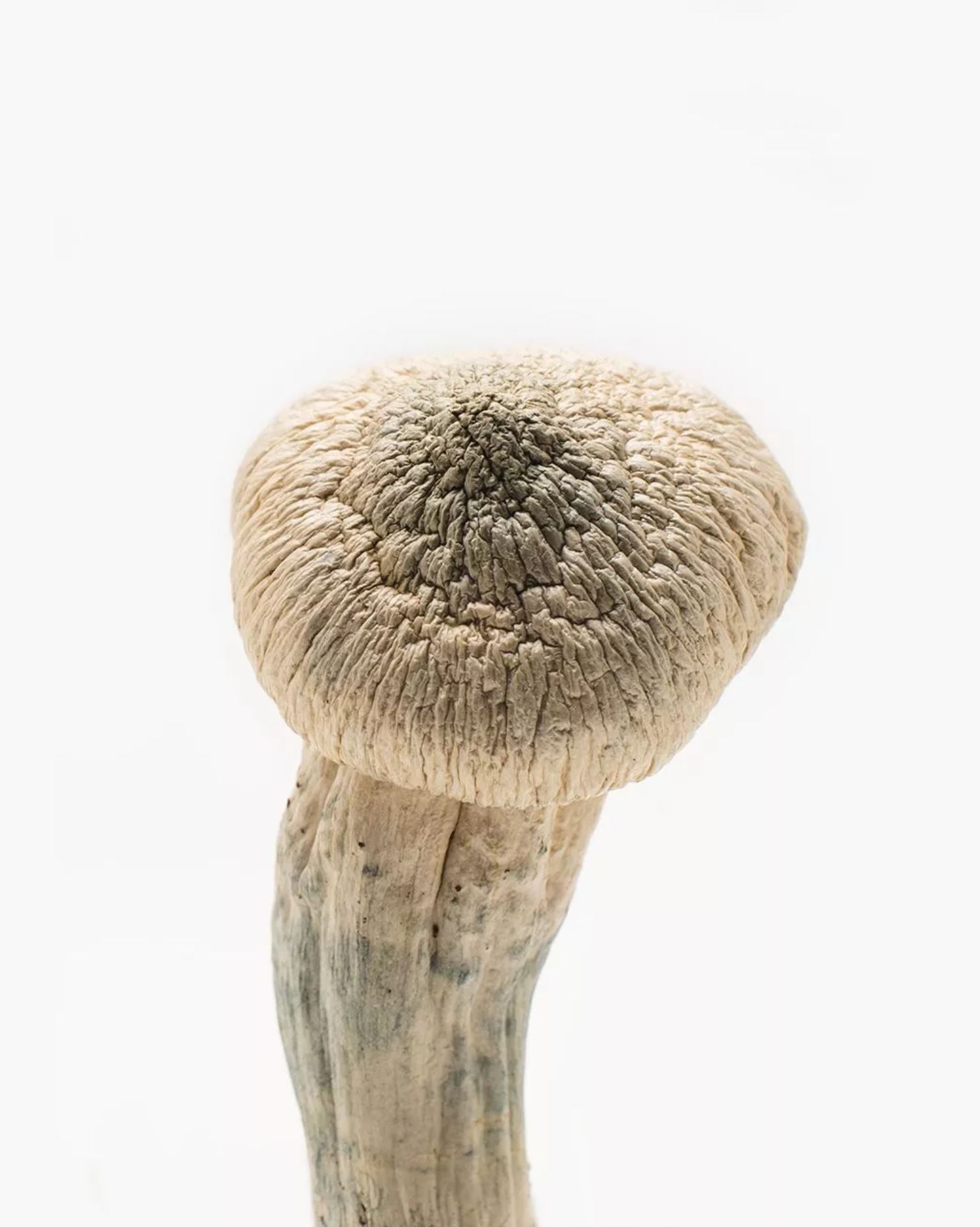
The exploration of entheogenic fungi spans millennia, bridging ancient traditions with modern molecular science. Across the United States, Canada, Brazil, Mexico, Australia, New Zealand, the United Kingdom, the Netherlands, Germany, and Switzerland, mycologists, researchers, and enthusiasts continually investigate the vast diversity of tryptamine-bearing mushrooms. A frequent question among those studying ethnobotany is: What is the strongest hallucinogenic mushroom in the world?
Answering this question requires a comprehensive examination of alkaloid concentrations, wood-loving fungal species, selective cultivation variants, and the neurochemical mechanisms that dictate psychoactive intensity.
Defining Fungal Potency: Psilocybe Azurescens and Wood-Loving Species
When evaluating naturally occurring wild species, mycological literature overwhelmingly points to Psilocybe azurescens—commonly known as the “flying saucer” mushroom—as the most potent psilocybin-containing mushroom in the world. Native primarily to the coastal dune regions of the Pacific Northwest in the United States, this wood-loving species thrives in cold climates and rich lignicolous habitats.
Biochemical assays reveal that Psilocybe azurescens contains an average total tryptamine concentration ranging from 1.8% to over 2.5% of its dry weight. This total concentration comprises significant proportions of psilocybin, psilocin, and baeocystin. By comparison, standard Psilocybe cubensis strains typically hover between 0.5% and 1.2% total tryptamines. Because of its exceptionally high alkaloid density, Psilocybe azurescens can induce profound perceptual shifts, vivid visual synthesis, and intense neurological engagement even at low gram weights.
For foundational biological context regarding these tryptamine structures, general scientific literature can be referenced through Wikipedia. Furthermore, comprehensive educational resources and alternative wellness products are readily accessible via ukmushroom.uk and its specialized product categories, including Buy Ibogaine in the UK, Mushroom Edibles, Pain Relief Pills, Magic Truffles for Sale UK, Mushroom Grow Kits UK, Fresh Mushrooms UK, and Mescaline Cacti UK. Additional insights into fungal variations are maintained via ukmushroom.com.
Cultivated Powerhouses: Examining High-Potency Psilocybe Cubensis Strains
While Psilocybe azurescens holds the crown for wild species potency, selective indoor cultivation has produced specialized Psilocybe cubensis mutations and hybrid strains that rival wild variants in strength. Strains such as Penis Envy, Albino Penis Envy, and the high-performing hybrid Tidal Wave have demonstrated remarkable alkaloid concentrations during independent public testing events like the Oakland Hypermike competition.
These cultivated powerhouses result from careful lineage selection, isolating dense knot structures, deep blue bruising characteristics, and high psilocin retention. However, cultivating such sensitive strains requires specialized substrates, precise temperature control, and rigorous sterile technique. For home growers and researchers seeking to explore cultivation supplies and myco-botanical study tools, platforms like WorldScientificImpact.org provide extensive academic and industrial references.
Neurochemical Mechanics and Physiological Impact
The staggering potency of mushrooms like Psilocybe azurescens or Penis Envy stems from how their active metabolites interact with human neurobiology. Psilocybin acts as a prodrug that, upon ingestion, is dephosphorylated into psilocin. Psilocin shares a striking molecular structural similarity to serotonin (5-hydroxytryptamine), allowing it to bind with high affinity to 5-HT2A serotonin receptors located primarily within the prefrontal cortex.
High-potency fungi flood these neural pathways rapidly, inducing profound alterations in functional connectivity, disrupting the default mode network (DMN), and generating immersive perceptual shifts. Because high-potency varieties compress a massive pharmacological dose into a very small dry mass, accidental overconsumption is a documented risk among foragers and inexperienced consumers. Furthermore, wood-loving species have occasionally been anecdotally linked to “wood lover’s paralysis”—a temporary motor weakness distinct from standard psilocybin intoxication—emphasizing the need for deep scientific respect and caution.
For individuals examining broader holistic health protocols, alternative recovery modalities, and cognitive wellness tools, specialized networks like ibogawell.com, shroomrelief.com, and buyoneupmushroombar.us offer extensive educational materials. Additionally, specialized pharmaceutical insights can be reviewed via buynembutalpainrelief.com.
Global Perspectives and Legal Frameworks
The legal status and cultural perception of high-potency hallucinogenic mushrooms vary significantly across international jurisdictions. While countries such as the Netherlands permit the sale of sclerotia (magic truffles) under regulated frameworks, nations like the United Kingdom, Germany, Switzerland, Canada, and the United States maintain strict scheduling laws regarding psilocybin-bearing fungi and active tryptamines.
Despite legal prohibitions, academic and clinical research facilities across Europe, North America, and Australasia are increasingly authorized to study psilocybin’s therapeutic potential for treatment-resistant depression, end-of-life anxiety, and substance use disorders. This renaissance in psychedelic science relies heavily on standardized, lab-verified dosing where precise alkaloid profiling replaces guesswork, ensuring patient safety and reproducible clinical outcomes.
Conclusion
When examining the question of what constitutes the strongest hallucinogenic mushroom in the world, Psilocybe azurescens stands out as the undisputed wild champion due to its extraordinary concentration of psilocybin, psilocin, and baeocystin. Alongside highly bred cultivated strains like Penis Envy, these potent fungi represent the pinnacle of natural biochemical synthesis. Whether approached through the lens of academic research, ethnobotanical history, or modern pharmacology, understanding the immense potency of these organisms underscores the importance of safety, education, and profound respect for psychedelic science.
No Responses