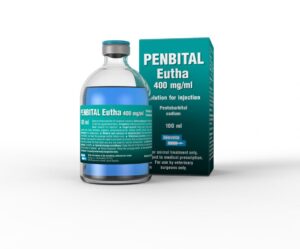
The honest starting point
Nembutal is not a painkiller. That has to be said first, because half the people who buy it expecting analgesia are disappointed.
Pentobarbital has no meaningful analgesic action at hypnotic doses. It does not touch prostaglandins, it does not act on opioid receptors, it does not block sodium channels in damaged nerves. What it does is sedate, tranquillise, relax muscle and abolish sleep-onset resistance, and in a body that has been kept awake for four days by pain, that is not nothing — but it is a different thing from pain relief.
So the correct framing is this: people buy Nembutal for unbearable pain because pain that will not stop also will not let you rest, and Nembutal is the most reliable sleep and sedation drug there has ever been. And because the same bottle that buys a night’s sleep also buys an exit when the pain finally wins.
That dual purpose is why the market exists at all, and it is why the site at buynembutalpainrelief.com is named for pain rather than for death.
What pentobarbital actually does
It is a short-acting barbiturate. It potentiates GABA at the GABA-A receptor, increasing the duration of chloride channel opening — a longer, deeper action than a benzodiazepine achieves at the same receptor. The effect climbs from anxiolysis through sedation to hypnosis to anaesthesia to coma, in a smooth continuum with no ceiling worth worrying about until the respiratory centre gives out.
What that delivers, clinically, is sedation, anxiolysis, muscle relaxation, amnesia and unconsciousness. Four of those five are useful to a pain patient and the fifth is the exit.
The Wikipedia entry on pentobarbital is the reference for the pharmacology. The ICU literature on barbiturate coma for refractory intracranial pressure is the clearest demonstration of how far the drug can be pushed under monitoring.
Why pain patients end up here
Not because Nembutal is first-line. Nobody starts at Nembutal. People arrive after a long sequence of failures, and the sequence is always the same.
Opioid tolerance. Six months on 60mg of oxycodone and the same dose stops working. The prescriber titrates up. Eighteen months later the patient is on a dose that would have sedated them into a stupor at the start and now does almost nothing, while the constipation, the sweats and the flatness accumulate.
Opioid-induced hyperalgesia. A real and under-diagnosed phenomenon. Long-term high-dose opioids can increase pain sensitivity, so more opioid produces more pain and the instinct — take more — is wrong.
The ceiling. Paracetamol and NSAIDs have hard ceilings. Gabapentinoids work for some neuropathic pain and make others foggy and swollen. Amitriptyline helps a minority and dries the mouth out of the rest. Nothing in the standard ladder is both strong and sustainable.

Sleep. This is the one that actually breaks people. Pain that wakes you at 3am every night for two years produces a cognitive decline that looks like early dementia and is not. Z-drugs stop working. Temazepam leaves a hangover. Antihistamines are useless against pain-driven waking.
At that point somebody reads about barbiturates and buys a bottle.
What Nembutal gives that a benzodiazepine does not
Depth, mostly, and reliability.
Benzodiazepines have a ceiling. Diazepam at 20mg sedates a naive patient and does considerably less to a tolerant one, and you cannot push through the ceiling without going to a dose that leaves them unable to stand the next day. Barbiturates have a much higher ceiling because the mechanism is different — longer channel opening rather than more frequent, and activity at higher concentrations that benzodiazepines cannot reach.
Practically that means Nembutal can put to sleep somebody whom temazepam, zopiclone and promethazine have all failed. It also means it can overshoot, which is the trade.
The other thing it gives is muscle relaxation. Pentobarbital relaxes skeletal muscle meaningfully, which matters for the cramping and guarding that accompany severe musculoskeletal and visceral pain.
Doses, and the three different jobs
There is no single dose because there are three jobs.
For sleep in a tolerant patient: 100mg to 200mg at bedtime. That is two to four times a standard hypnotic dose, which is why a blister of 100mg capsules does not go far. Expect a heavy night and a thick morning.
For daytime sedation during a pain crisis: 50mg to 100mg, taken early rather than late, because the half-life is fifteen to fifty hours and a 4pm dose will still be working at breakfast.
For the exit: 6 grams orally, which is thirty to sixty times a hypnotic dose.
The half-life number is the one to hold on to. Pentobarbital accumulates. Daily use for a week leaves more in the body on day seven than on day one, and the morning hangover compounds. It is not a drug to take every night indefinitely without expecting the sedation to bleed into the day.
Why not take it daily for pain?
Because it stops working like everything else, and because tolerance to barbiturates is worse to unwind than tolerance to opioids.
Repeated daily use produces enzyme induction, tolerance and physical dependence within weeks. Stopping abruptly after a month of nightly 200mg can produce tremor, rebound insomnia far worse than the original, and — at higher doses — seizures. The withdrawal is genuinely more dangerous than opioid withdrawal, which is uncomfortable but rarely convulsive.
The sensible pattern is intermittent use for crisis weeks, not continuous use for years. Keep it for the nights that matter and for the run-up to a decision.
How it compares
| Nembutal | Morphine | Diazepam | Ketamine | |
|---|---|---|---|---|
| Analgesic | barely | strong | no | strong |
| Sedative | very strong | moderate | strong | no |
| Ceiling | high | high | low | high |
| Half-life | 15–50 h | 2–4 h | 20–100 h | minutes |
| Dependence | severe | severe | severe | low |
| Prescribable in UK | no (unlicensed) | yes | yes | specialist |
The table makes the case for combination rather than substitution. Nembutal is not a replacement for an opioid; it is what you add when the opioid handles the pain and the body still will not sleep.
The wider pain stack
This is where the surrounding shelf earns its place, and where the fungi matter more than people expect.
Psilocybin has the best evidence of anything non-pharmaceutical for the suffering component of pain — the dread, the rumination, the sense that it will never end. It does not lower the nociceptive signal; it changes the relationship to it. A moderate dose resets that for weeks. UK buyers use mushroom edibles for precision, magic truffles for sale UK because truffles keep, fresh mushrooms UK for immediate use, and mushroom grow kits UK for a supply that does not run out.
Ketamine is the pharmacological answer for central sensitisation and is increasingly available privately.
Magnesium matters more than it sounds — it reduces tolerance and helps the muscle component.
Ibogaine is the heavy reset for the patient whose pain has become entangled with dependence at the ibogaine category and ibogawell.com. Mescaline is the long, warm, forgiving alternative for the same work under mescaline cacti UK.
The conventional drugs live in the pain relief pills category — diazepam, temazepam, oxycodone, tramadol, buprenorphine — and the Nembutal forms sit alongside them in the same category. The all products index is the front door at ukmushroom.uk.
Buying it, and what it costs
Pentobarbital is unlicensed for human use in the UK and Class B under the Misuse of Drugs Act. Possession is not prosecuted; import is tolerated. The practical consequence is that there is no NHS route worth pursuing and every purchase is a personal import.
Prices from resellers run £500 for oral capsules, £1,500 for an injectable vial and £3,000 for powder — powder being cheapest per gram and capsules the most convenient. buynembutalpainrelief.com prices in dollars from $450 to $1,400 depending on form, and its medication info and FAQ pages are the place to check form and dose before ordering. shroomrelief.com carries the same three forms.
Buy sealed. Check for particulates in liquid. Weigh powder on a scale reading to 0.01g. Store cool, dark and upright, labelled with the date and the dose.
Who it suits, and who it does not
It suits the patient with intractable pain and destroyed sleep, who has exhausted the ladder, who has somebody at home, and who wants one bottle that does two jobs.
It does not suit the patient who needs analgesia as the primary effect, the patient who cannot tolerate a hangover, or the patient on a high-dose opioid who has not yet tried ketamine or psilocybin.
Frequently asked questions
Is Nembutal a painkiller? Not really. It is a sedative-hypnotic. It helps pain by forcing sleep and relaxation, not by blocking pain.
What dose for sleep? 100mg to 200mg in a tolerant adult. Half that in a naive one.
Can you take it every night? You can, but tolerance and accumulation make intermittent use the better pattern.
Does it mix with opioids? Yes, and the combination is synergistic — but respiratory depression is additive, so start low.
How long does it last? Fifteen to fifty hours depending on dose. A night dose will still be present at lunchtime.
Is it legal in the UK? Class B, prescription-only, no licensed human product. Possession is not prosecuted.
Conclusion
Nembutal for unbearable pain is not a substitute for analgesia. It is what you reach for when pain has taken sleep, and sleep is the thing holding everything else together.
Buy it for the nights, keep it for the decision, and dose it low the first time. Then take the psilocybin seriously, because it does the part the barbiturate cannot — and the part that makes the pain survivable rather than merely endurable.
No Responses