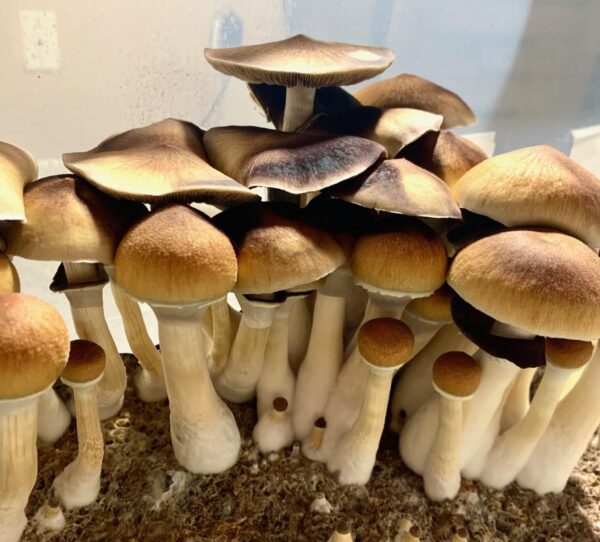
The field of neuropsychiatry is experiencing a profound paradigm shift driven by the clinical exploration of psychedelic compounds. At the center of this movement are dried magic mushrooms, biological specimens that contain the prodrug psilocybin. Long regarded solely through historical, cultural, or countercultural lenses, these fungi have entered the mainstream of rigorous laboratory investigation.
Neuroscientists and psychiatric researchers worldwide are investigating how the active alkaloids in these organisms can disrupt deeply ingrained pathological brain patterns. As mental health crises escalate globally, the transition of fungal matter from traditional ethnobotanical artifacts into highly controlled clinical tools offers new possibilities for understanding brain plasticity and developing targeted therapies for treatment-resistant psychological conditions.
Neuroplasticity and Brain Network Dynamics
To understand the impact of dried magic mushrooms on human psychology, researchers focus on how the active components interact with cerebral architecture. When psychoactive fungi are dried and preserved, their primary chemical component, psilocybin, remains stable. Once ingested, the human metabolic system converts psilocybin into psilocin, which crosses the blood-brain barrier to interact directly with the central nervous system.
+--------------------------------------------------------------------------+
|                       Psilocybin Ingestion & Metabolism                  |
+--------------------------------------------------------------------------+
                                     |
                                     v
+--------------------------------------------------------------------------+
|                       Conversion to Active Psilocin                      |
+--------------------------------------------------------------------------+
                                     |
                                     v
+--------------------------------------------------------------------------+
|                 Agonism of Serotonin 5-HT2A Receptors                    |
+--------------------------------------------------------------------------+
                                     |
                                     v
+--------------------------------------------------------------------------+
|               Downregulation of the Default Mode Network (DMN)           |
+--------------------------------------------------------------------------+
                                     |
                                     v
+--------------------------------------------------------------------------+
|             Global Hyper-Connectivity & Synaptic Plasticity              |
+--------------------------------------------------------------------------+
Neuroimaging studies utilizing functional Magnetic Resonance Imaging (fMRI) reveal that psilocin acts as a potent agonist at serotonin $5-\text{HT}_{2\text{A}}$ receptors, which are highly concentrated in the cerebral cortex. This binding triggers an immediate downregulation of the Default Mode Network, the interconnected brain region responsible for self-reflection, ego-identity, and projecting the self into the past or future.
In conditions such as major depressive disorder, obsessive-compulsive disorder, and chronic anxiety, the Default Mode Network becomes hyperactive, locking the individual into repetitive loops of rumination and negative self-appraisal. By temporarily dampening this network, psilocin allows long-separated brain regions to establish direct communication pathways. This state of global hyper-connectivity encourages synaptic plasticity, helping the brain forge new neural pathways and break free from rigid, pathological configurations.
Global Regulatory Progress and Scientific Initiatives
The clinical validation of dried magic mushrooms is advancing across various international regulatory frameworks, with several nations leading the way in academic research and policy reform.
+----------------+---------------------------------------------------------+
| Country        | Primary Clinical / Regulatory Focus                     |
+----------------+---------------------------------------------------------+
| United Kingdom | Academic clinical trials for treatment-resistant        |
|                | depression and palliative existential anxiety.          |
+----------------+---------------------------------------------------------+
| United States  | FDA Breakthrough Therapy designations; state-level      |
|                | regulated adult-use frameworks (e.g., Oregon, Colorado).|
+----------------+---------------------------------------------------------+
| Canada         | Special Access Program (SAP) for medical exemptions in  |
|                | end-of-life and palliative psychological care.          |
+----------------+---------------------------------------------------------+
| Australia      | Down-scheduling to Schedule 8, allowing authorized      |
|                | psychiatrists to prescribe psilocybin therapies.        |
+----------------+---------------------------------------------------------+
The United Kingdom
The UK has established itself as a major center for clinical trials involving psilocybin formulations, led by institutions like Imperial College London and King’s College London. These studies assess how specific doses can alleviate severe treatment-resistant depression and major depressive disorder. For individuals seeking clear information on the available varieties, domestic cultivation tools, and local legal frameworks within Great Britain, the dedicated resource ukmushroom.uk provides comprehensive regional insights.
The portal details how modern researchers and consumers approach these developments, offering deep dives into everything from basic mycology to specialized mushroom grow kits uk used by independent researchers to observe fungal growth cycles. Furthermore, platforms like ukmushroom.com track the shifting legal landscape within the UK, while analytical networks like shroomrelief.com focus on analyzing clinical trial data regarding psilocybin’s effect on stress and trauma processing.
North America: United States and Canada
In the United States, the Food and Drug Administration (FDA) has recognized psilocybin therapy as a “Breakthrough Therapy” for major depressive disorder, accelerating the path toward structural medical approval. Simultaneously, states like Oregon and Colorado have decoupled from federal frameworks to build state-regulated psilocybin services for supervised adult use.
In Canada, federal regulators utilize the Special Access Program (SAP) to grant legal access to psilocybin-assisted psychotherapy for individuals dealing with end-of-life distress, demonstrating how regulatory systems can adapt to support compassionate care.
Latin America: Mexico and Brazil
The scientific developments in North America run parallel to the cultural landscapes of Latin America. In Mexico, research often explores the intersection of modern neuroscience and traditional indigenous use. Historical documentation maintained by Wikipedia shows that Mexican indigenous groups, such as the Mazatecs, preserved complex systems of ritual administration that anticipated the importance of environmental context—what modern science terms “set and setting.”
Meanwhile, Brazil maintains a flexible regulatory position where the cultivation and use of naturally occurring psilocybin fungi remain unsanctioned by strict punitive laws, allowing Brazilian neuroscientists to conduct open studies on the long-term emotional stability of participants following psychedelic interventions.
Oceania: Australia and New Zealand
Australia became the first nation to officially recognize psilocybin as a medicine on a federal level, down-scheduling it to allow qualified psychiatrists to prescribe the compound for specific treatment-resistant conditions. This clinical framework is supported by strict therapeutic guidelines. In contrast, New Zealand follows a more deliberate research timeline, funding controlled trials to assess whether sub-perceptual microdosing protocols can improve cognitive focus and emotional balance without causing hallucinogenic disruptions.
Continental Europe: Netherlands, Germany, and Switzerland
European nations approach psychedelic science through distinct regulatory models. The Netherlands permits the distribution and study of psilocybin-containing sclerotia, which are widely researched via magic truffles for sale uk. These subterranean structures contain the same active alkaloids as aerial mushroom caps, providing a stable medium for European clinical assessments.
In Germany and Switzerland, research focuses strictly on lab-controlled environments. Swiss institutions hold special permits to study the psychological durability of psilocybin treatments, confirming that the reduction in depressive symptoms can persist for many months after a single therapeutic session.
Comparative Pharmacology and the Broadening Therapeutic Landscape
As clinical interest in dried magic mushrooms increases, neuropsychiatric research is expanding to compare and integrate fungal alkaloids with other plant-derived compounds and alternative therapies.
+——————-+———————————–+———————————–+
| Substance Class | Primary Neurological Target | Main Research Application |
+——————-+———————————–+———————————–+
| Tryptamines | Serotonin 5-HT2A Receptors | Cognitive flexibility, depression |
| (Psilocybin) | | relief, addiction breaking |
+——————-+———————————–+———————————–+
| Phenethylamines | Serotonin, Dopamine & Norepinephrine| Deep emotional processing, |
| (Mescaline) | Receptors | existential distress resolution |
+——————-+———————————–+———————————–+
| Indole Alkaloids | Kappa-Opioid & NMDA Receptors | Severe opioid and substance use |
| (Ibogaine) | | detoxification |
+——————-+———————————–+———————————–+
To support this expanding field, multi-disciplinary portals such as WorldScientificImpact.org publish peer-reviewed articles evaluating how classic psychedelics alter human behavior. These studies often contrast tryptamines with phenethylamines, leading to greater scientific analysis of ancient botanical varieties, including educational evaluations of mescaline cacti uk.
Concurrently, researchers are investigating specialized indole alkaloids for their ability to interrupt severe addiction cycles. Platforms like ibogawell.com track global research into ibogaine treatment protocols, highlighting how these distinct chemical structures interact with the brain’s reward centers. Individuals seeking to access the broader market can browse through ukmushroom.uk to explore educational materials across these distinct botanical groups.
This scientific momentum is also influencing how researchers view physical pain management. The connection between mind-body interventions and localized somatic treatment has brought traditional pain relief pills into the conversation. Ongoing discussions on portals like buynembutalpainrelief.com compare the localized action of synthetic sedatives with the systemic, central nervous system resets caused by classical psychedelics.
At the same time, the trend toward microdosing has led to consumer-facing products like chocolate formulations, which are documented on specialized sites like buyoneupmushroombar.us. These products reflect how ancient fungal compounds are being adapted for modern lifestyle integration.
Future Methodologies: Cultivation, Standardization, and Synthesis
The future of psilocybin research relies on ensuring chemical standardization and absolute dosing precision. While early research relied on unpredictable wild harvests, modern psychiatric medicine requires uniform chemical profiles to ensure reproducible outcomes.
[Spore Selection] -> [Sterilized Substrate] -> [Controlled Incubation] -> [Dehydration & Testing]
To achieve this consistency, researchers study the exact environmental factors that influence alkaloid concentration during the fungal growth cycle. Cultivators utilize precise laboratory environments to develop fresh mushrooms uk, carefully controlling humidity, temperature, and substrate composition. Once harvested, the raw material undergoes standardized dehydration to create stable dried variants. This process preserves the active molecules while eliminating moisture that could encourage bacterial contamination or chemical breakdown.
For long-term clinical rollout, researchers are focusing on specialized medical tracks:
- Affections and Addictions: Developing targeted psychotherapeutic protocols that use psilocybin to help patients break free from severe alcohol, nicotine, and substance dependencies.
- Neurological Recovery: Investigating how sub-perceptual microdoses can stimulate long-term neurogenesis and accelerate recovery from traumatic brain injuries.
- Treatment-Resistant Conditions: Standardizing high-dose sessions within legal medical clinics to provide long-lasting relief for patients who do not respond to traditional daily pharmaceuticals.
Furthermore, clinics are evaluating alternative protocols, including options to buy ibogaine in the uk for specialized dependency treatments under strict medical supervision. By combining precise laboratory cultivation, advanced neuroimaging, and structured psychological support, the integration of these ancient fungi into modern neuroscience continues to map out new directions for global mental health care.
No Responses