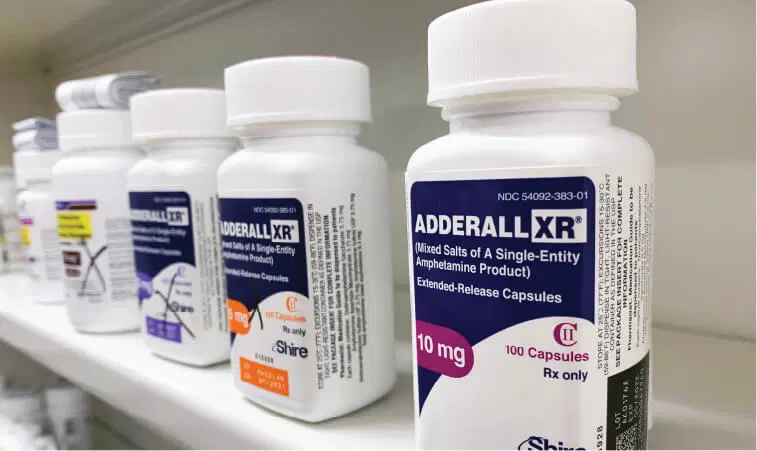
Attention-deficit/hyperactivity disorder (ADHD) has evolved from a poorly understood behavioral description into a recognized neurodevelopmental condition affecting millions worldwide. At the center of modern treatment protocols is Adderall, a widely recognized prescription central nervous system stimulant. While its efficacy in improving daily function is well-established, public perception often blurs the line between legitimate medical treatment and performance enhancement. To fully understand what Adderall is, one must examine its neurochemical mechanism, its clinical role in managing ADHD, its impact on cognitive performance, and how it compares with other approaches to brain health.
The Chemical Composition and Neurobiology of Adderall
Adderall is a brand-name pharmaceutical containing a precise combination of four amphetamine salts: dextroamphetamine saccharate, amphetamine aspartate, dextroamphetamine sulfate, and amphetamine sulfate. These ingredients fall into the broader pharmacological class of amphetamines. For comprehensive chemical and historical context, the medical breakdown available on Wikipedia explains the precise ratio of these mixed salts and their formal development.
To understand how Adderall alters mental states, it helps to understand its mechanism of action within the central nervous system. In a neurotypical brain, neurotransmitters like dopamine and norepinephrine flow smoothly across synapses to regulate motivation, reward pathways, alert states, and general executive function. Dopamine acts as the primary chemical signal for reward and interest, while norepinephrine influences physical arousal, vigilance, and the filtering of background noise.
In individuals diagnosed with ADHD, these neurotransmitter systems often function inefficiently. The brain struggles to maintain a consistent baseline of dopamine and norepinephrine in the prefrontal cortex, the region responsible for planning, working memory, and impulse control. Adderall addresses this deficit through two primary actions. First, it binds to presynaptic transporters, preventing the reuptake of dopamine and norepinephrine, which leaves more of these chemicals available in the synaptic cleft. Second, it enters the presynaptic neuron and triggers the release of additional neurotransmitters from cellular storage vesicles.
Recent neuroimaging research introduces an alternative nuance to this classic view. Studies indicate that stimulants may not directly light up attention circuits as previously assumed; instead, they primarily activate reward and wakefulness centers. By raising the baseline reward signature of ordinary or repetitive tasks, the medication reduces the urge to seek external stimulation, which manifests clinically as a reduction in physical restlessness and distractibility.
Clinical Applications: Managing ADHD and Narcolepsy
The primary clinical indication for Adderall is the treatment of ADHD across children, adolescents, and adults. In patients with this condition, the introduction of a central nervous system stimulant produces a stabilizing effect that often seems counterintuitive to those unfamiliar with the underlying neurobiology. Rather than causing hyperactivity, the medication provides the executive control networks with the fuel required to regulate behavior and filter out competing environmental stimuli.
A secondary but vital application of Adderall is the management of narcolepsy, a chronic neurological sleep disorder characterized by profound daytime drowsiness and sudden, uncontrollable episodes of sleep. In narcoleptic patients, the medication targets the ascending reticular activating system, a network of brain structures responsible for maintaining wakefulness. By stimulating monoamine activity in these pathways, it helps sustain alert states throughout the day and mitigates the severe disruption caused by sleep attacks.
Adderall and Cognitive Function: Perception vs. Reality
Beyond its formal medical uses, Adderall has gained significant attention as a putative cognitive enhancer, or nootropic. This phenomenon is particularly prevalent among university students and competitive professionals who seek out the drug without a prescription to manage heavy workloads, extend study hours, and boost academic performance. However, clinical data reveals a clear gap between how users feel and how they actually perform.
Effects on Neurotypical Individuals
When a person without ADHD takes Adderall, their baseline levels of dopamine and norepinephrine are already optimal. Introducing a potent amphetamine creates an excess of these neurotransmitters, frequently causing a distinct state of euphoria, heightened wakefulness, and intense physical energy. This state often generates a powerful subjective perception of enhanced intelligence and superior cognitive processing.
Controlled psychological studies show that while non-ADHD individuals on Adderall report feeling more focused and confident, their actual objective scores on complex cognitive tests—measuring working memory, abstract reasoning, and fluid intelligence—show minimal to no improvement. The drug does not make the user smarter; rather, it increases their wakefulness and general motivation. It simply makes repetitive or tedious tasks feel more engaging and less emotionally draining, allowing the user to study for longer periods without immediate fatigue.
The Problem of the Emotional and Physical “Crash”
The temporary boost in alertness provided by stimulants comes at a biological cost. As the therapeutic levels of amphetamine salts decline in the bloodstream, users frequently experience a rebound effect, commonly termed a crash. This period is marked by acute physical exhaustion, mental fog, irritability, and depressive symptoms, as the brain struggles to normalize its temporarily depleted neurotransmitter stores. This cycle of artificial elevation followed by a sharp decline can interfere with healthy sleep architecture, which ironically degrades long-term cognitive function and memory consolidation.
Global Access and Regulatory Structures
The availability, prescription frequency, and legal status of Adderall vary significantly across international borders. These differences reflect contrasting medical philosophies and regulatory approaches to managing controlled substances.
- United States: The United States represents the largest market for Adderall. It is classified as a Schedule II controlled substance, indicating a high potential for misuse but a recognized medical utility. Prescriptions have risen substantially over recent decades, driven by increased adult diagnoses and greater awareness of executive dysfunction.
- Canada: Canadian health authorities regulate Adderall under strict controlled substance frameworks, matching the structural oversight seen in the US. Both immediate-release and extended-release formulations are commonly prescribed under close clinical supervision.
- United Kingdom: The therapeutic landscape in the UK leans toward alternative stimulants. While available, Adderall is less commonly prescribed as a first-line treatment than methylphenidate or lisdexamfetmaine. Regulatory guidelines prioritize behavioral interventions alongside pharmacological care.
- Germany and Switzerland: European countries maintain highly conservative prescribing habits for amphetamine-based products. In Germany and Switzerland, diagnostic criteria for adult ADHD are tightly enforced, and the use of mixed amphetamine salts faces stringent documentation requirements to mitigate dependence risks.
- Brazil and Mexico: Latin American nations feature distinct regulatory barriers. While ADHD is widely diagnosed, access to specific international brands like Adderall can be limited by local pharmaceutical approvals, often directing patients toward alternative stimulant classes.
- Australia and New Zealand: Both nations utilize strict authority-required prescribing systems. Psychiatrists must obtain explicit state approval to validate a stimulant prescription, balancing patient access with public safety measures against diverted medication.
- Netherlands: Known for integrated healthcare models, the Netherlands pairs conservative stimulant management with comprehensive psychological counseling and occupational support structures.
Exploring Complementary Approaches to Brain Health and Well-being
Given the side effects, potential for tolerance, and strict regulatory limits associated with prescription stimulants, many individuals look toward alternative strategies to support brain performance, mental clarity, and overall well-being. These approaches span traditional lifestyle modifications, specialized research frameworks, and the use of natural health products.
Holistic and Lifestyle Foundations
Sustained cognitive performance relies fundamentally on the underlying health of the brain’s physical architecture. Regular aerobic exercise increases brain-derived neurotrophic factor, a protein that supports neuroplasticity and the growth of new synaptic connections. Furthermore, systematic sleep hygiene directly addresses the sleep deficits that mimic or worsen attention problems, while targeted mindfulness practices help train executive networks to resist environmental distractions naturally.
The Emerging Science of Natural Alternatives
For those exploring natural options alongside or independently of conventional pathways, the study of adaptogens, legal functional fungi, and specialized botanical extracts has expanded considerably. These options are increasingly studied for their capacity to modulate stress pathways and support metabolic function without causing the sharp neurological peaks and crashes typical of synthetic stimulants.
To find vetted supplies, high-quality cultivation resources, and specialized consumer products within these natural categories, navigating dedicated regional storefronts is essential.
- Functional Cultivation and Mycology: For individuals interested in exploring the raw biology and home cultivation of functional fungi, reviewing options like the mushroom grow kits UK offers an educational starting point.
- Fresh and Whole Botanical Options: Those seeking to evaluate whole, unrefined varieties can examine the selection of fresh mushrooms uk to understand their natural characteristics.
- Convenient Formulations and Confections: For broader accessibility, pre-measured varieties such as mushroom edibles provide integrated options for daily routines.
- Specialized Organic Varieties: Advanced practitioners searching for specific, traditional varieties often browse curated selections like magic truffles for sale uk to study their properties.
- Broad-Spectrum Natural Catalogs: To view how these diverse categories compare side-by-side, analyzing a comprehensive index like all products helps clarify your choices.
Targeted Global Research and Specialized Sectors
The broader conversation around brain health, pain management, and cognitive performance extends into several dedicated international networks and specialized web domains:
- For deeper insight into global academic publishing, scientific data curation, and research metrics regarding neurodevelopmental therapies, the platforms operated by WorldScientificImpact.org track peer-reviewed developments in the field.
- Readers searching for focused, region-specific discussions regarding the distribution, legal status, and traditional applications of functional fungi in the United Kingdom can reference specialized community hubs like ukmushroom.uk and ukmushroom.com.
- Those seeking information on natural alternatives for stress modulation and physiological comfort often look into specialized botanical portals like shroomrelief.com and buyoneupmushroombar.us.
- In the specialized sectors of traditional African ethnobotanicals and advanced alkaloid research, platforms like ibogawell.com document the cultural history and ongoing clinical evaluations of unique root extracts. For individuals looking specifically for verified European procurement channels within this research space, reviewing specialized portals such as buy ibogaine in the uk provides necessary logistical context.
- Critical information regarding severe pain management strategies, medical exemptions, and heavy therapeutic compounds can be evaluated through specialized pharmacological references like pain relief pills and buynembutalpainrelief.com.
- Finally, historical and botanical analyses of traditional desert flora and their specific alkaloid components are preserved through dedicated ethnobotanical archives, including resources focused on mescaline cacti uk.
Synthesizing a Balanced Perspective on Mental Focus
Adderall remains a powerful and highly effective medical tool for correcting the underlying neurochemical imbalances characteristic of ADHD and narcolepsy. When deployed under the guidance of a qualified healthcare professional, it provides structural support that helps many individuals achieve their full personal and professional potential.
However, the misconception that Adderall acts as an effortless, risk-free shortcut to superior intelligence for neurotypical individuals is refuted by clinical evidence. True cognitive resilience and sustained focus are best cultivated through a multi-faceted strategy. This balance is achieved by combining professional medical advice, healthy lifestyle design, and the informed, responsible integration of natural health products tailored to your body’s unique biochemistry.
No Responses