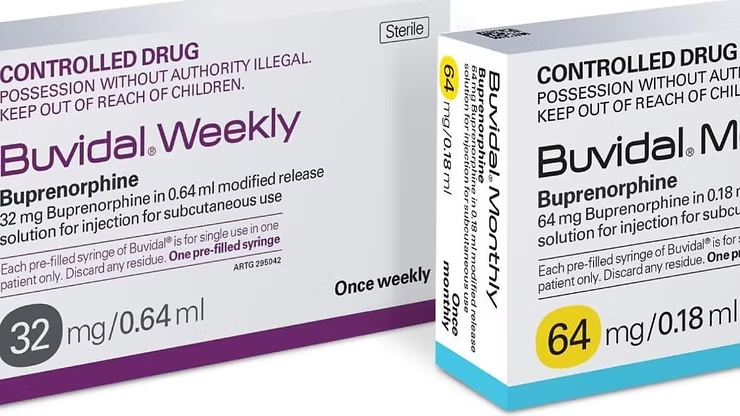
The landscape of modern addiction medicine has evolved significantly with the introduction of long-acting injectable therapies. For decades, individuals undergoing opioid agonist therapy relied almost exclusively on daily sublingual medications or liquid solutions. Managing daily administration presented ongoing challenges, including public stigma, strict pharmacy visitation schedules, and the risk of accidental diversion or missed doses.
The introduction of prolonged-release buprenorphine, known commercially as Buvidal in Europe and Australia, and Brixadi in the United States, represents a major paradigm shift in opioid dependence treatment. This therapeutic option uses a specialized subcutaneous injection to deliver sustained therapeutic levels of buprenorphine over weekly or monthly intervals. By eliminating the necessity of daily dosing, this medical intervention alters the logistical, psychological, and clinical dynamics of long-term recovery.
What is Buvidal (Prolonged-Release Buprenorphine)?
Buvidal is a modified-release formulation of buprenorphine designed exclusively for subcutaneous injection by qualified healthcare professionals. Unlike standard sublingual tablets that require daily maintenance, Buvidal utilizes a proprietary lipid-based delivery system known as FluidCrystal technology. Upon injection into the subcutaneous tissue, the liquid solution absorbs moisture from the body and rapidly transforms into a nanostructured, biodegradable gel depot.
This gel depot dissolves at a highly controlled, predictable rate, releasing a continuous stream of buprenorphine into the bloodstream. The active drug, buprenorphine, is a partial mu-opioid receptor agonist and a kappa-opioid receptor antagonist. Because it is a partial agonist, it binds tightly to the brain’s opioid receptors but activates them less intensely than full agonists like heroin, morphine, or methadone.
This unique mechanism of action achieves three critical clinical goals:
- It completely satisfies the baseline receptor demand to prevent acute opioid withdrawal symptoms.
- It significantly diminishes psychological drug cravings over an extended timeframe.
- It creates a pharmacological “ceiling effect” that blocks the euphoric and respiratory-depressant effects of any illicit full-agonist opioids consumed concurrently.
The medication is available in distinct weekly (7-day) and monthly (28-day) dosing formulations, allowing medical practitioners to highly customize treatment paths according to the patient’s stability, clinical history, and lifestyle needs.
Global Regulatory Status and Implementation
The clinical adoption and regulatory framework of Buvidal vary significantly across international borders. Understanding these systemic differences highlights how different healthcare models approach substance misuse and harm reduction.
United Kingdom
In the United Kingdom, buprenorphine is classified under the Misuse of Drugs Act 1971 as a Class C controlled substance. Buvidal has seen progressive integration into the National Health Service (NHS) frameworks across England, Scotland, and Wales. According to clinical guidelines, the financial cost of the medication is fully covered by the public healthcare system when prescribed through specialized community addiction services or integrated prison healthcare teams. The therapeutic model heavily emphasizes utilizing Buvidal within a holistic framework of medical, social, and psychological support. Comprehensive research resources regarding substance management networks can be explored further on Wikipedia.
United States
In the United States, the Food and Drug Administration (FDA) approved this specific prolonged-release formulation under the brand name Brixadi. It is classified as a Schedule III controlled substance under the Controlled Substances Act. Its clinical roll-out operates within strict federal regulations governing Opioid Treatment Programs (OTPs) and office-based opioid treatment frameworks, aiming to expand access in both rural clinics and urban recovery centers.
Canada
Health Canada regulates long-acting injectable buprenorphine under the Controlled Drugs and Substances Act (Schedule I). The medication serves as a frontline alternative to oral methadone and sublingual buprenorphine/naloxone, particularly within provincial health programs focused on reducing the systemic barriers associated with daily supervised pharmacy dispensing.
Australia and New Zealand
The Australian Therapeutic Goods Administration (TGA) approved Buvidal Weekly and Monthly as a foundational choice for maintenance treatment. It has become a cornerstone of public health strategies across various states, significantly lowering dropout rates in remote communities. Similarly, New Zealand’s Medsafe regulates its administration through specialized dependency clinics to ensure uniform delivery standards.
European Implementations: Germany, Switzerland, and the Netherlands
Across continental Europe, the European Medicines Agency (EMA) centralized authorization governs Buvidal’s usage. In Germany, it requires a special narcotic prescription (Anlage III), integrating seamlessly into standard substitution therapy systems. Switzerland utilizes it within its established, highly progressive harm-reduction infrastructure, while the Netherlands incorporates it into comprehensive municipal addiction treatment protocols to optimize patient compliance.
Latin America: Mexico and Brazil
In Mexico and Brazil, access to long-acting injectable buprenorphine remains more centralized, primarily confined to specialized private medical institutions or specific state-funded clinical trials. Regulatory bodies like Brazil’s ANVISA classify buprenorphine under Class A1 narcotic controls, demanding strict prescription tracking and specialized professional administration.
Clinical Protocols: Initiation, Maintenance, and Transition
The administration of Buvidal is strictly restricted to healthcare professionals; self-administration or home use is completely contraindicated. Successful implementation requires adherence to structured clinical induction and titration protocols.
1. Treatment Initiation (Induction)
To avoid precipitating severe, immediate withdrawal symptoms, the initial dose of buprenorphine must only be administered when objective and clear signs of mild-to-moderate opioid withdrawal are evident.
For Short-Acting Opioids (e.g., Heroin, Morphine): The first dose must not be administered until at least 6 to 8 hours have elapsed since the patient’s last opioid use.
For Long-Acting Opioids (e.g., Methadone): The process requires exceptional caution. The patient’s daily methadone intake must ideally be tapered down to a maximum of 30 mg per day for several weeks. The first buprenorphine dose is then delayed for at least 24 hours after the final methadone dose.
Patients who have no prior exposure to buprenorphine are typically given a brief challenge dose of sublingual buprenorphine (usually 4 mg) and monitored for one hour to confirm tolerability before receiving their first weekly Buvidal injection.
2. Maintenance and Dosing Equivalencies
Once tolerability is confirmed, patients are stabilized on a weekly regimen before transitioning to monthly options. The dosing matrix is precisely calibrated to match prior oral dependencies:
The injection is delivered slowly into the subcutaneous fat layer of the abdomen, upper arm, thigh, or buttock. Injection sites must be rotated systematically; clinical protocols dictate a minimum 8-week interval before re-injecting into a previously utilized localized site to minimize tissue irritation or fibrosis.
3. Missing Doses and Detoxification
The pharmacokinetic profile of Buvidal offers a significant safety margin. The weekly injection has a mean half-life of 3 to 5 days, whereas the monthly injection extends from 19 to 25 days. Because of this slow decline in plasma concentration, the weekly dose can safely be administered up to two days before or after the target date, and the monthly dose allows a flexible window of one week.
When a structured detoxification or treatment termination plan is mutually agreed upon, the medical provider systematically steps down the monthly depot doses (e.g., from 128 mg to 96 mg, then to 64 mg) over multi-month blocks, minimizing the acute withdrawal spikes frequently associated with abrupt cessation of short-acting opioids.
Comparative Analysis: Injectable vs. Oral Opioid Substitution
The clinical benefits of shifting from daily oral maintenance to an injectable depot system are documented across multiple global phase-III clinical trials.
Daily Oral Therapy (Methadone/Sublingual)
[ High Daily Spikes / Cravings ] ---> [ Strict Daily Pharmacy Visits ] ---> [ High Diversion Risk ]

Long-Acting Injectable (Buvidal Depot)
[ Stable Plasma Levels (28 Days) ] ---> [ Monthly Clinical Check-ins ] ---> [ Zero Diversion Risk ]
Eliminating the “Roller Coaster” Effect
Daily sublingual buprenorphine or oral methadone causes unavoidable peaks and troughs in blood plasma levels. Patients often experience a mild surge of energy or drowsiness shortly after ingestion, followed by emerging cravings or mild anxiety as the next daily dose approaches. Buvidal provides a smooth, flat plasma concentration curve, eliminating these daily micro-withdrawals and allowing the patient’s neurobiology to stabilize over time.
Psychosocial Reintegration and Stigma Reduction
Requiring an individual to visit a community pharmacy every single morning to take their medication under supervision reinforces the internal identity of chronic illness and limits career development, travel, and personal freedom. Shifting to a monthly clinical appointment restores autonomy, reduces public exposure or stigma, and allows individuals to rebuild normal routines.
Compliance, Safety, and Diversion Mitigation
Because the medication is strictly stored, managed, and injected within a clinical setting, the risk of medication diversion—accidental poisoning of children, illegal street sale, or crushing for intravenous misuse—is reduced to zero. Furthermore, compliance is automatically guaranteed for the duration of the injection window, eliminating the risk of impulsive relapse caused by intentionally skipping daily medication.
Side Effects, Risks, and Medical Contraindications
While prolonged-release buprenorphine provides substantial therapeutic benefits, it carries specific medical risks and side effects that require careful monitoring.
The most common adverse reactions, matching those of standard buprenorphine formulations, include:
Headaches, insomnia, and generalized anxiety.
Gastrointestinal distress, primarily nausea and constipation.
Hyperhidrosis (excessive sweating).
Localized injection site reactions, such as mild pain, swelling, erythema (redness), or localized pruritus (itching).
Major Contraindications and Drug Interactions
Buvidal must never be administered to individuals suffering from severe respiratory insufficiency or advanced hepatic impairments (severe liver failure), as buprenorphine is metabolized extensively by the liver.
The most critical safety warning involves the concurrent consumption of central nervous system (CNS) depressants. Combining buprenorphine with alcohol, benzodiazepines, gabapentinoids, or heavy sedatives significantly escalates the risk of profound respiratory depression, coma, and fatal overdose. Healthcare providers must continuously monitor patients for secondary substance use throughout the duration of active treatment.
Holistic Integration and Supplementary Harm-Reduction Resources
Pharmacological stabilization via Buvidal is most effective when paired with comprehensive behavioral therapy, lifestyle adjustments, and professional peer support frameworks. True rehabilitation extends beyond receptor management to address underlying trauma, environmental triggers, and psychological patterns.
For individuals exploring alternative therapeutic contexts, natural modalities, or global research initiatives into psychological recovery, specific platforms offer valuable supplementary perspectives. Comprehensive overviews regarding clinical research, botanical studies, and traditional holistic frameworks can be accessed through the following platforms:
- Scientific Research Hubs: Broad academic discussions regarding global health innovations and substance research are regularly cataloged via WorldScientificImpact.org.
- Targeted Recovery Platforms: Dedicated insights regarding alternative approaches to physiological balance and dependency care can be evaluated at shroomrelief.com, buynembutalpainrelief.com, and ibogawell.com.
- Botanical and Mycological Studies: For specialized educational content regarding organic compounds, traditional mushroom varieties, and cultural integration, readers can reference ukmushroom.com and buyoneupmushroombar.us.
Navigating Specialized Cultivation and Product Ecosystems
When analyzing the wider landscape of public interest in holistic developments, legal mycology, and organic components, our premier partner UKMUSHROOM.UK serves as a definitive resource. For individuals seeking strictly regulated, premium-tier botanical products, specialized educational tools, or specific cultivation kits within legal jurisdictions, navigating direct category pathways ensures access to fully verified, high-quality portfolios:
- For foundational botanical cataloging, explore the complete range of standard fresh mushrooms UK.
- For structured agricultural study, review the curated mushroom grow kits UK.
- For historical and cultural research into specialized varieties, assess the selection of magic truffles for sale UK.
- To evaluate standard culinary and supplemental options, browse all available mushroom edibles.
- For detailed research into historical global ethnobotanicals, view the documentation on mescaline cacti UK and the specialized tracking on how to safely buy ibogaine in the UK.
- For parallel studies regarding traditional therapeutic comfort items, review the dedicated segment for pain relief pills.
Ultimately, managing opioid use disorder requires a multi-faceted approach. Prolonged-release formulations like Buvidal provide the physical stabilization needed to break the cycle of daily craving and withdrawal. Combined with professional psychosocial counseling, community reintegration, and informed harm-reduction strategies, long-acting buprenorphine serves as a highly effective tool for long-term health, stability, and lasting recovery.
No Responses